Category Archives: Desserts

Dulce de Leche Mini Cheesecakes

DSC04531-3

What says “I Love You” more than cheesecake, dulce de leche, chocolate and whipped cream all in one hand-held mini dessert? In my book, dessert doesn’t get much better that this. And these pocket-sized cups of bliss are small enough that it is easy for me to justify that I’m not really cheating on that healthy-eating-plan, right?

Unless of course, you make THIS MANY, which destroys any illusion of willpower:

DSC04528-1

This recipe is a loose interpretation of Smitten Kitchen’s Dulce De Leche Cheesecake Squares.

The impetus for trying this recipe came when I found these great free-standing baking cups (technically they are for brioche) from Plastic Container City. I knew that I wanted to make cheesecakes in them, and what better than a dulce de leche flavored cheesecake!

DSC04275-1

Rather than a graham cracker crust, I used my favorite cheesecake crust which is a simple combination of finely chopped almonds, vanilla wafer cookies and butter.

DSC04286-1 Place your crust-lined baking cups on a large baking sheet (or use a muffin tin with foil baking cups) and bake for 5 minutes, to toast the almonds.

Cool and pour in the batter. This cheesecake batter is a most delicious combination of cream cheese and dulce de leche, which you can easily make yourself, or purchase premade (look in the Latin section of the ethnic food aisle in the grocery store). But it is really easy to make yourself with just a can of sweetened condensed milk. Check out these tutorials for 6 different ways to make your own Dulce de Leche.

DSC04297-1

Bake until center is barely set and allow to cool completely.

DSC04307-1

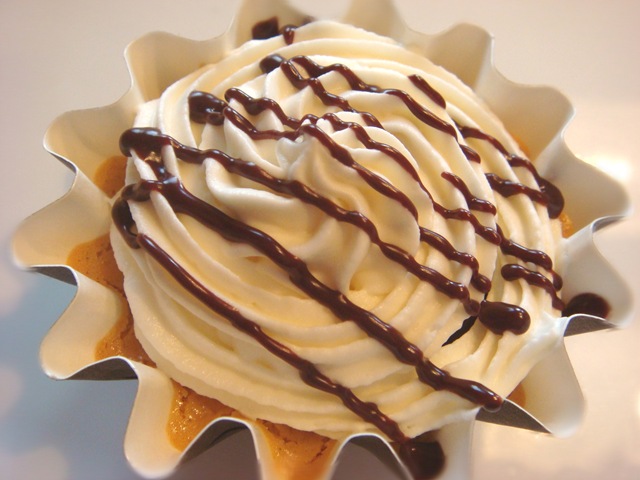
I drizzled a chocolate glaze over the cooled cheesecakes.

DSC04513-1 Not wanting to clean chocolate out of my pastry bag, I used a plastic zip-close bag to do the drizzling. (Either snip one corner of the bag, or poke a bamboo skewer through the inside corner of the bag before filling with chocolate). I do recommend using a quality brand freezer-bag, however, so that the bag will not burst at the seams when you squeeze it, leaving you with one VERY chocolatey cheesecake:

DSC04499-1After cleaning up my chocolate mess and making an additional batch of chocolate glaze:

I then topped each cheesecake with a swirl of whipped cream. The whipped cream is a stable whipped cream from Coleen’s Recipes. It will hold it’s shape for days in the refrigerator and is stiff enough to pipe with a pastry tip (this time I did use my pastry bag). I would have liked to have used a larger tip, but I don’t own one (yet!). The cream cheese in the whipped cream topping was a perfect complement to the cheesecake. Coleen’s blog has some great family friendly recipes, and I have gotten many practical tips from her!

DSC04528-1 A final drizzle with the chocolate glaze and they are ready for a few hours of chilling in the fridge-if you can wait that long!
DSC04531-1

RECIPE:

Dulce de Leche Mini Cheesecakes

DSC04531-3

INGREDIENTS:
Crust:

½ cup crushed vanilla wafers or shortbread cookies**
½ cup finely chopped whole almonds**
2 Tbs melted butter
1/8 tsp salt

Filling:
1 tsp unflavored gelatin (about half an envelope of Knox brand)
¼ cup whole milk
8 oz cream cheese, softened
2 large eggs
½ tsp salt
1 cup dulce de leche

Glaze:
¼ cup (heaping) chopped bittersweet chocolate
2 Tbs butter, cut into small pieces
1 Tbs light corn syrup

Whipped Cream Topping (from Coleen’s Recipes):
4 oz cream cheese
¼ cup sugar
½ tsp vanilla
¼ tsp almond extract
1 cup heavy cream

PREPARATION:
Crust:
Preheat oven to 350°F.

Mix all crust ingredients. Press into baking cups (use 1-2 tsp crust mix per mini cheesecake). Place baking cups on a large baking sheet. Bake at 350°F for 5 minutes. Cool.

**I use a food processor to chop the cookies and almonds

Filling:
Sprinkle gelatin over milk in a small bowl and let stand 2 minutes to soften. Beat together cream cheese, eggs, salt, and gelatin mixture in a bowl with an electric mixer at medium speed until well combined, about 2 minutes, then beat in dulce de leche  thoroughly. Pour filling over crust in baking cups.

Place an empty broiler or roasting pan on the lowest oven rack. Pour 2 cups of boiling water into the empty pan.

Place baking sheet with cheesecake batter on the center rack in the oven. Bake at 350°F for 15 minutes, or until center is barely set. Remove from oven and cool completely.

Glaze:
Place all ingredients in a microwave safe bowl. Cook on high power for 20 seconds. Remove and stir well. Add 10 seconds, if necessary. Be careful not to scorch. You can also use a double boiler to melt ingredients together.

Place melted (but not hot) chocolate glaze into a freezer bag (good quality, so it doesn’t burst) or pastry bag with a fine tip. If using a freezer bag, cut a corner (or poke a bamboo skewer through the corner). Pipe a swirl of chocolate glaze over cooled cheesecakes.

Set aside remaining glaze. Prepare whipped cream topping. Pipe an additional swirl of chocolate glaze over the whipped cream.

Whipped Cream:
Combine the cream cheese, sugar and extracts in a large mixing bowl. Beat with an electric mixer until very smooth (scraping sides often). While the mixer is running, slowly pour in heavy cream. Continue beating on high speed until stiff peaks form.

Place whipped cream mixture in a pastry bag with a large star tip. Pipe onto cheesecakes. Pipe an additional swirl of chocolate glaze over the whipped cream.

Chill cheesecakes in the refrigerator for 2-3 hours. They will keep, refrigerated (even with the whipped cream frosting!) for several days.

Adapted from Smitten Kitchen

NoEmptyChairs.me

4 Comments

Filed under Desserts

Dessert Fondues

dec 396-1

_______dec 411-1

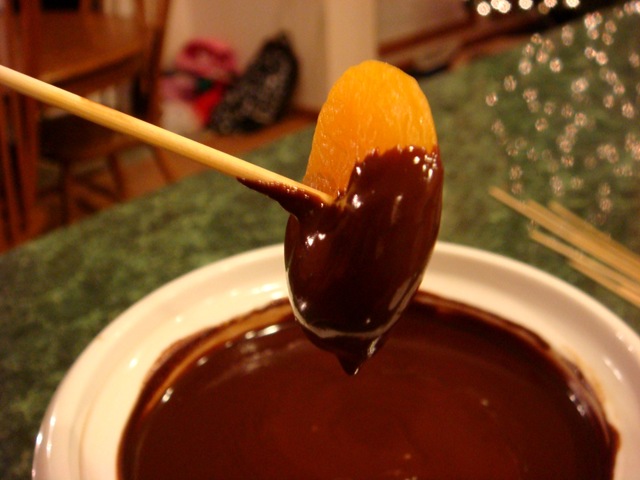
Chocolate and Vanilla Dessert Fondues: what other way could you possibly end an All-Dipping-All-Day Christmas? (Actually, next year I’m thinking butterscotch might be fun to try)

The best part (other than the actual eating) is how simple they are to put together at the last minute. The dipping items: fruit and other not so healthy items, can be prepared ahead of time. And it look less than 10 minutes to make both of the fondue mixtures.

It would be hard to do a day of fondue without ending it with a chocolate fondue. This was definitely everyone’s favorite dish (except Little A, but he was perfectly happy with his vanilla version).

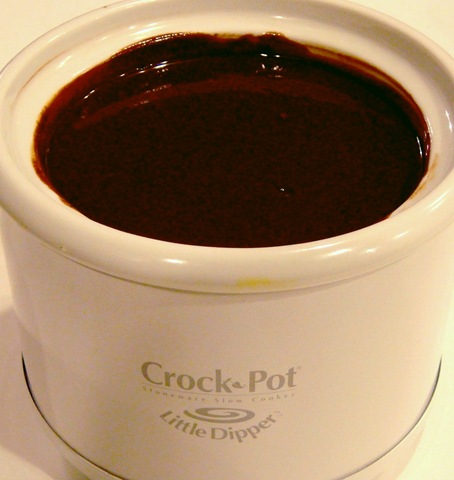
I made a Dark Chocolate Fondue, but you could easily adjust that based on what kind of chocolate you use. The recipe is embarrassingly simple: heat some heavy cream in the microwave, pour it over some chocolate chips (I used Ghirardelli Bittersweet), add some vanilla and a dash of salt and stir.

dec 376-1

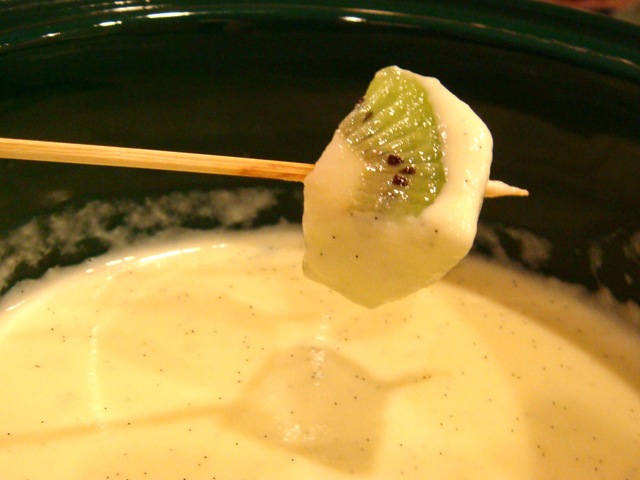
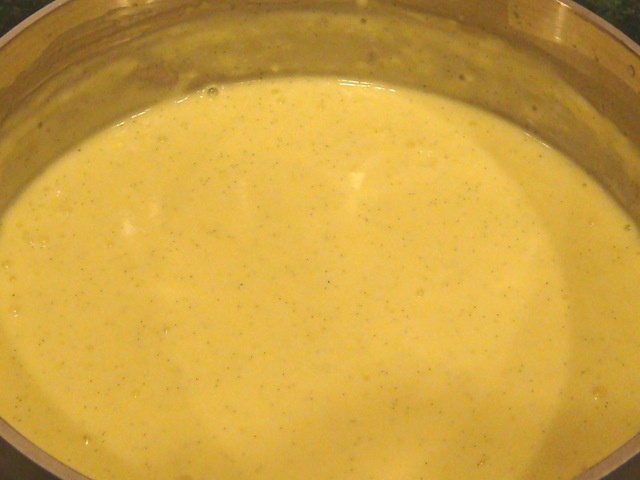
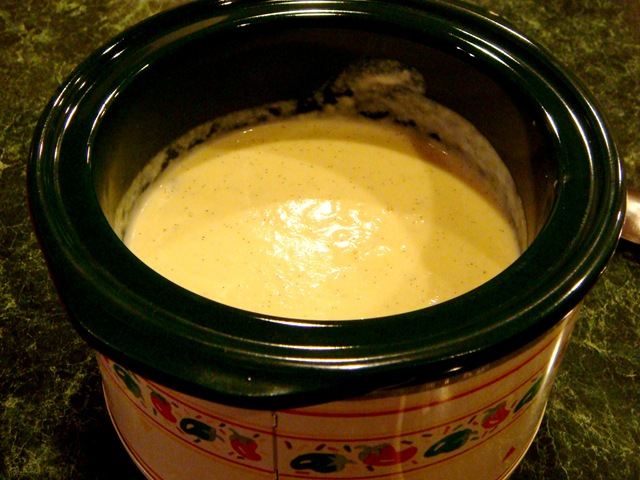
The Vanilla Custard Fondue was only slightly more complicated, as it did require a pan on the stove. For this fondue, I adapted a simple stirred custard recipe. Normally it would be cooked, chilled and eaten as a pudding, but it was great warm as a fondue. The custard is made by combining beaten eggs, cream, milk, sugar, and a vanilla bean and cooking until the mixture thickens.

dec 401-1

I used two mini crock pots to serve these fondues.

dec 373-1 dec 404-1

What to dip in dessert fondues? What can’t you dip!

dec 417-1

dec 356-1

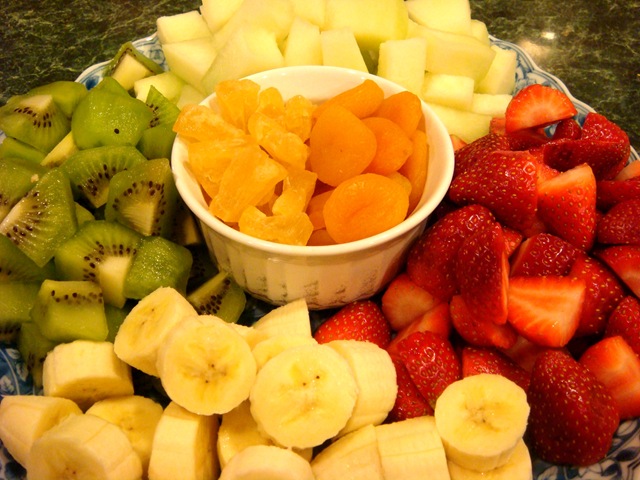
Fresh fruit is an obvious great choice (strawberries, kiwi, bananas, melon, pineapple, mangos), but don’t stop there. We also used some dried fruit (apricots are fabulous!). And then there are the not-so-healthy dipping items: cakes (pound cake or angel food cake), unfrosted sugar cookies or shortbread cookies, graham crackers, marshmallows, pretzels, and everyone’s favorite: mini cream puffs!

RECIPES:

Dark Chocolate Fondue

dec 396-1

¾ cup heavy cream
6 oz (about 1 cup chips) bittersweet chocolate, chopped
1 tsp vanilla
Dash salt

Heat cream in the microwave for one minute (or on the stove for about 5 minutes). Pour over chocolate. Let stand one minute. Add salt and vanilla and stir until melted. Pour into a mini crock pot or fondue pot. Serve with Dipping Items.

Dipping Items:
Fresh or dried fruit: strawberries, kiwi, bananas, melon, pineapple, mangos, apricots
Pound cake or angel food cake, unfrosted sugar cookies or shortbread cookies, graham crackers, marshmallows, pretzels, mini cream puffs

NoEmptyChairs.me
Vanilla Custard Fondue

dec 411-1

3 beaten eggs
1 ½ cups cream
½ cup milk
¼ cup sugar
½ of a vanilla bean or 1 tsp vanilla extract

Split vanilla bean and scrape seeds. Add bean and seeds with remaining ingredients in a heavy saucepan. Cook and stir over medium heat until mixture thickens. Remove vanilla bean. (Add vanilla extract at the end of cooking if not using vanilla bean) Pour custard into a fondue pot or mini crock pot. Serve with Dipping Items.

Dipping Items:
Fresh or dried fruit: strawberries, kiwi, bananas, melon, pineapple, mangos, apricots
Pound cake or angel food cake, unfrosted sugar cookies or shortbread cookies, graham crackers, marshmallows, pretzels, mini cream puffs

NoEmptyChairs.me

1 Comment

Filed under Desserts

Marbled Pumpkin Cheesecake Bars

DSC02368-1

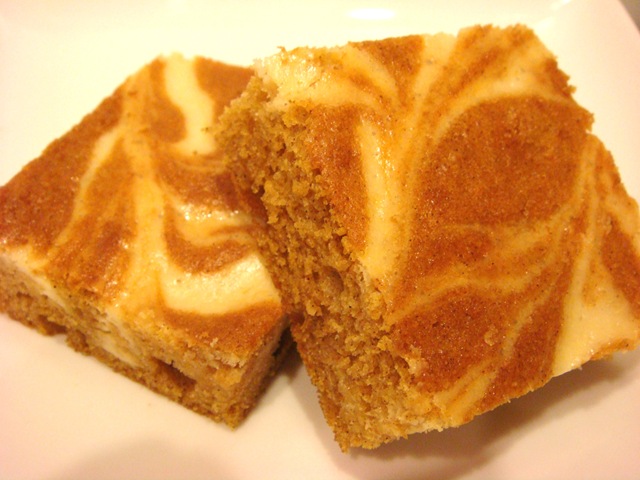
I recently tried a new pumpkin bar recipe that was really good. I found the original recipe on CookieMadness. We all really liked the bars, but as cheesecake is one of my favorite desserts, I think that next time I make these I will go heavier on the cheesecake marbling. It looked really pretty, and the cheesecake swirl helped make the  bars wonderfully moist, but the cheesecake part was not a real stand-out flavor.

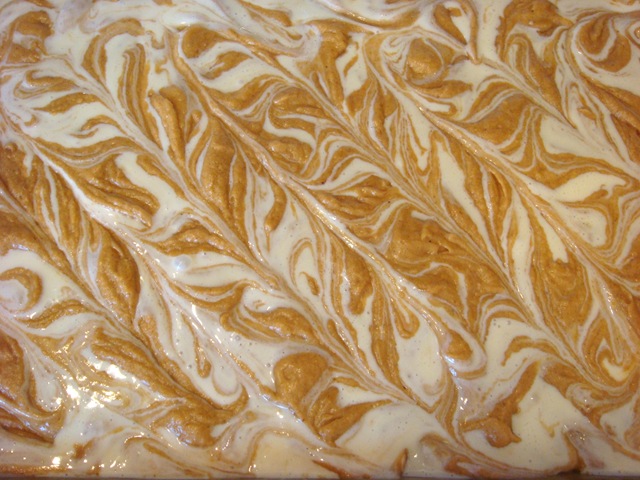
These bars are made by preparing a pumpkin batter, which is spread into a 15×10” pan. The cream cheese layer is added to the top and then run through with a knife to create the swirled pattern.

An easy way to create a swirl is to start in one upper corner and run the knife back and forth diagonally across the pan to the opposite lower corner. Then start in the opposite upper corner and run the knife diagonally the other way.

DSC02267-1 Doesn’t that make a gorgeous swirl!

DSC02299-1

Below is the recipe that I adapted (a little) from CookieMadness. Next time I will add more of the cream cheese batter (maybe double).

UPDATE (10/11/2011): My daughter made these last night with double the amount of the cream cheese batter. They were great! I will be making them that way from now on.

RECIPE:

Marbled Pumpkin Cheesecake Bars

DSC02368-1

6 tablespoons unsalted butter, melted
¼ teaspoon salt
1 ½ cups granulated sugar
2 large eggs
1 cup canned pumpkin
½ cup buttermilk or kefir
1 tsp vanilla
1 ¾ cups all-purpose flour
2 teaspoons ground cinnamon
1 teaspoon baking soda
½ teaspoon baking powder
¼ teaspoon ground nutmeg

Swirl (Double the ingredients below for a more pronounced cheesecake flavor):
8 oz cream cheese, softened
¼ cup granulated sugar
¼ teaspoon vanilla
1 large egg

Preheat oven to 350°F. Spray a 15×10 inch pan  with cooking spray.

Pumpkin Batter: Mix together the butter, salt, and sugar. With a mixing spoon or whisk, beat in eggs, pumpkin, buttermilk, and vanilla until well blended, scraping down sides of bowl as needed. Mix flour, cinnamon, baking soda, baking powder, and nutmeg together; stir into batter. Reserve about ¼ of the batter. Spread remaining ¾ of batter evenly in prepared pan.

Swirl: In a second bowl, with a mixer, beat cream cheese, sugar, and vanilla until smooth. Add egg and beat until smooth. Drop tablespoons of cheese mixture over pumpkin batter, then drag a knife through to swirl. Drop reserved pumpkin batter over the top and swirl again. Bake on center rack until pumpkin batter springs back when touched, about 30 minutes. Let cool completely in pan, then chill for an hour or more.

Cut into 24 bars.

NoEmptyChairs.me
5 Comments

Filed under Desserts

Dulce de Leche

DSC02455.jpg

**Below are six different ways to make Dulce de Leche. Click on the “METHOD” titles to go to the individual blog posts for more detailed instructions and pictures**

Dulce de Leche

DSC02455.jpg

STOVETOP METHOD:

Ingredients:

  • unopened cans of sweetened condensed milk

Preparation:

  1. Start with a large stockpot. Place a rack in the bottom of the pot (mine has a steamer insert that I used).
  2. Remove the labels from your sweetened condensed milk. Place unopened, label-free cans  into the bottom of your stockpot. You can use as many as will fit in one layer in your pot.
  3. Fill pot with room temperature tap water. Cover cans completely with water. The water level should be at least 2 inches above the cans.
  4. Cover the pot and bring to a boil. Reduce heat to a simmer. Cook, covered, for 3 hours.
    ***The water level must remain above the top of the cans. If not—this is when you end up cleaning caramel from exploding cans off of the top of your ceiling and every surface beneath it*** To ensure that you don’t forget that you are cooking when you go off and start another project, set a timer for 30 minutes. Check water level (add more boiling water, if necessary), then set the timer again for another 30 minutes. Continue setting the timer in 30 minute increments until the 3 hours are up.
  5. Remove pan from heat, remove lid, and let water cool for 30-60 minutes before removing cans.
  6. Unopened cans can be stored on a pantry shelf (use a marker to label cans). Opened cans need to be refrigerated.

CROCKPOT METHOD:

Ingredients:

  • Unopened cans of sweetened condensed milk

Preparation:

  1. Remove labels from sweetened condensed milk cans. Do not open cans.
  2. Place cans in the bottom of a crock pot.
  3. Cover cans completely with room temperature water. **Be sure that water completely covers cans**
  4. Place the lid on the crock pot and cook on low heat for 8 hours. (The water level in my crock pot stayed the same for the entire cooking time, so there was no need to add additional water.)
  5. Turn off crock pot, remove lid and let water cool 30-60 minutes before removing cans.
  6. Unopened cans can be stored on a pantry shelf (use a marker to label cans). Opened cans need to be refrigerated.

OVEN METHOD:

Ingredients:

  • One can of sweetened condensed milk

Preparation:

  1. Preheat oven to 425°F.
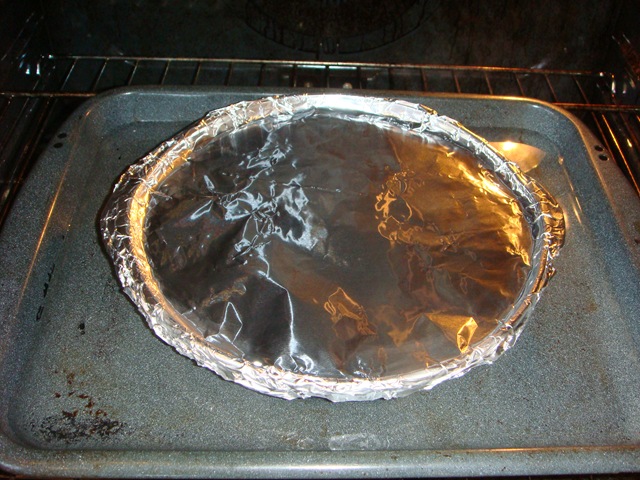
  2. Pour one can of sweetened condensed milk into a glass pie plate. Cover the pie plate securely with foil.
  3. Place foil-covered pie plate in a larger baking pan. (I used the bottom half of a broiler pan.)
  4. Place the pans on an oven rack and add hot water until it reaches the halfway mark of the pie plate.
  5. Bake for 60-90 minutes, adding more water if necessary

DOUBLE BOILER METHOD:

Ingredients:

  • One can of sweetened condensed milk

Preparation:

  1. Pour one can of sweetened condensed milk into the top of a double boiler.
  2. Fill the bottom of the double boiler with water and bring to a boil.
  3. Cover pan and cook over low heat for 50-60 minutes (or longer to get desired consistency).
  4. Stir mixture occasionally, until thick and caramel-colored.

PRESSURE CANNER METHOD:

Ingredients:

  • Cans of sweetened condensed milk

Preparation:

  1. Wash canning jars (a quick run through the dishwasher is a good way to sanitize them). Place new canning lids in a small pan of very hot water (bring water to a boil, then remove from heat and add lids).
  2. Open sweetened condensed milk cans and pour into canning jars, leaving 1/2” headspace. (Try not to lick the remaining sweet milk off of the can lids now-you don’t want to incorporate any germs into the jars. There will be plenty of time for licking when the jars are processing.)
  3. Wipe rims and edges of jars with a damp cloth to remove any milk that dribbled.
  4. Place lids and rings on jars.
  5. Place filled jars on a rack in a pressure canner (YOU MUST USE A PRESSURE CANNER, NOT A BOILING BATH CANNER). Add 3 quarts of room temperature water. DO NOT BRING WATER TO A BOIL BEFORE ADDING JARS. Since you are not doing a “hot pack” (hot jars; hot filling; hot water), the jars WILL break if you place them directly into boiling water. Then you end up with a very large pot full of sticky, sugar milk/water. Leaving you to clean all of the other jars and the pot and start over. Not fun.
  6. Place the lid on the pressure canner and bring the water to a boil over high heat.
  7. After you have a steady steam flow through the vent pipe for 10 minutes, place the pressure regulator on the vent pipe.
  8. Continue to cook on high until pressure reaches 15 lb.
  9. Lower heat to maintain a constant 15 lb pressure. Keep an eye on the pressure gauge and adjust heat to maintain 15 lb of pressure. Cook for 20 minutes at 15 lb pressure. I used both pint and half-pint jars, and they both came out the same after 20 minutes.
  10. Turn off stove and remove pressure canner from heat. DO NOT OPEN. Let the pressure drop until the air vent/cover lock has completely dropped and no steam escapes when the pressure regulator is tilted (this took about 30 minutes for mine).
  11. When pressure is completely reduced, remove pressure regulator and open canner. Remove jars and set on the countertop on a clean towel.
  12. Let sit for 24 hours. Check seal. Refrigerate for added food safety.

HOMEMADE METHOD
(Adapted from Alton Brown):

Ingredients:

  • 4 cups (1 quart) whole milk
  • 1 ½ cups granulated sugar
  • ½ tsp baking soda
  • 1 vanilla bean, split

Preparation:

  1. Combine the milk and sugar in a heavy saucepan.
  2. Bring to a boil over medium heat. Do not stir.
  3. Remove from heat and use a skimmer to remove foam (a spoon or small ladle will work if you don’t have a skimmer).
  4. Add baking soda and split (but not scraped) vanilla bean to the pan.
  5. Cook, uncovered, over low heat for one hour, stirring often and skimming foam as necessary.
  6. Remove vanilla bean and continue to cook, stirring constantly, until mixture reaches desired thickness.  This will take about 60 minutes, depending on how thick you want your caramel. It will burn easily at this point, so be attentive!
  7. The dulce de leche is close to done when a spoon dragged through the mixture leaves a trail. It will thicken a lot as it cools. Test for consistency by dropping a small spoonful into a cup of ice water, or by placing a few drops on a plate that has been placed in the freezer.
  8. The original recipe calls for straining through a fine mesh strainer, but I skipped this step and it was still nice and smooth.

NoEmptyChairs.me

Leave a comment

Filed under Candy, Desserts, Tips and Tutorials

Dulce de Leche (Six Ways) PART THREE

DSC02455

Here we are at the last installment of making your own Dulce de Leche. You should definitely be feeling the sugar-rush effects now. Today we move into slightly more involved ways of making Dulce de Leche. Try PART ONE and PART TWO for some easier preparations. These last two methods take a little bit more effort, but are well worth it (every now and again, at least). They also involve a few “special equipment” items.

Neither of today’s methods involve unopened cans or water baths, so all is safe. Kind of. Unless you count the possibility of botulism. But we will get into that in a minute. Scroll to the bottom for my final recommendations.

Today we are looking at making dulce de leche:

  • in jars in a PRESSURE CANNER
  • HOMEMADE

.

PRESSURE CANNER

(from a can but sealed in jars)

DSC03704.JPG-2

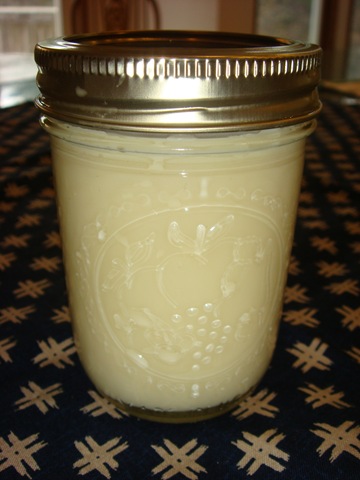
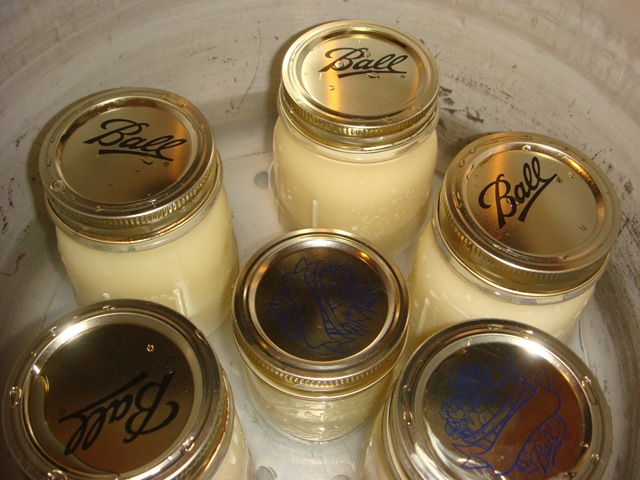
In trying this method, I was hoping for the same taste as the boiled unopened cans. But the cans do not come out of a boiling water bath looking very attractive. So how to present these as attractive gifts? Pressure canning is what I came up with. This is another method with a big DISCLAIMER. The USDA does NOT recommend canning milk products. I did find several sites giving instructions (not USDA approved) for canning regular milk and cheese. Granted, most of these were homesteading sites. So I am throwing caution to the wind and trying it. I figure that on my side in the not-ending-up-with-botulism argument are the following points:

  • I am starting with an already canned milk product, not fresh milk.
  • There is so much sugar in sweetened condensed milk that it would take a lot to make it spoil.
  • I have canned meat successfully, and it is approved by the USDA if using a pressure canner.
  • Butter can be canned, and it is a milk product.

These are my justifications for making this and letting the jars sit on a shelf in my basement. As part of this ongoing experiment, I will force myself to open a jar of this dulce de leche every month or so to make sure they are still edible. But my official recommendation to you is to refrigerate these jars after canning them. Then there is no possible food-safety issue.

Also, please refer to the instruction manual for your specific pressure canner before attempting this recipe. I am including the basic instructions for using mine. DO NOT USE A BOILING BATH CANNER. THAT WILL DEFINITELY EARN YOU A CASE OF FOOD POISONING.

  1. Wash canning jars (a quick run through the dishwasher is a good way to sanitize them). Place new canning lids in a small pan of very hot water (bring water to a boil, then remove from heat and add lids).
  2. ODSC03600pen sweetened condensed milk cans and pour into canning jars, leaving 1/2” headspace. (Try not to lick the remaining sweet milk off of the can lids now-you don’t want to incorporate any germs into the jars. There will be plenty of time for licking when the jars are processing.)
  3. Wipe rims and edges of jars with a damp cloth to remove any milk that dribbled.
  4. Place lids and rings on jars.
  5. DSC03602Place filled jars on a rack in a pressure canner. Add 3 quarts of room temperature water. DO NOT BRING WATER TO A BOIL BEFORE ADDING JARS. Since you are not doing a “hot pack” (hot jars; hot filling; hot water), DSC03585the jars WILL break if you place them directly into boiling water. Then you end up with a very large pot full of sticky, sugar milk/water. Leaving you to clean all of the other jars and the pot and start over. Not fun.
  6. Place the lid on the pressure canner and bring the water to a boil over high heat.
  7. DSC03606After you have a steady steam flow through the vent pipe for 10 minutes, place the pressure regulator on the vent pipe.
  8. Continue to cook on high until pressure reaches 15 lb.
  9. Lower heat to maintain a constant 15 lb pressure. Keep an eye on the pressure gauge and adjust heat to maintain 15 lb of pressure. Cook for 20 minutes at 15 lb pressure. I used both pint and half-pint jars, and they both came out the same after 20 minutes.
  10. Turn off stove and remove pressure canner from heat. DO NOT OPEN. Let the pressure drop until the air vent/cover lock has completely dropped and no steam escapes when the pressure regulator is tilted (this took about 30 minutes for mine).
  11. DSC03611 When pressure is completely reduced, remove pressure regulator and open canner. Remove jars and set on the countertop on a clean towel.
  12. Let sit for 24 hours. Check seal. Refrigerate for added food safety.

.

.

.

.

HOMEMADE

(no cans here)

DSC03684

This is the first “recipe” for dulce de leche that I’ve made with actual ingredients. This is adapted from a recipe from Alton Brown. It is a lot more time consuming than any of the other methods, but is it ever worth it! This was truly decadent! Don’t you just love the vanilla bean flecks? As the other methods produced a caramel that was more of a dipping or spreading consistency, I wanted this one to be one that I could pour. DSC03755 On ice cream, for example. The only tricky part of this recipe is knowing when to remove the dulce de leche from the heat. Leave it too long and you end up with caramels suitable for cutting (not all bad either) and more susceptible to turning “sugary”. Don’t cook it long enough and you end up with a brown-colored-sweet-milky syrup. Not really dulce de leche.

The only two drawbacks to this method are the time involved (lots of standing at the stove stirring the pot), and the fact that you can only make one batch at a time, which will need to be refrigerated.

Ingredients:

  • 4 cups (1 quart) whole milk (don’t skimp here!)
  • 1 ½ cups granulated sugar
  • ½ tsp baking soda
  • 1 vanilla bean, split

Preparation:

  1. Combine the milk and sugar in a heavy saucepan.
  2. Bring to a boil over medium heat. Do not stir.
  3. DSC02526 Remove from heat and use a skimmer to remove foam (a spoon or small ladle will work if you don’t have a skimmer).
  4. Add baking soda and split (but not scraped) vanilla bean to the pan.
  5. DSC02532Cook, uncovered, over low heat for one hour, stirring often and skimming foam as necessary.
  6. Remove vanilla bean and continue to cook, stirring constantly, until mixture reaches desired thickness.  This will take about 60 minutes, depending on how thick you want your caramel. It will burn easily at this point, so be attentive!
  7. DSC03652 The dulce de leche is close to done when a spoon dragged through the mixture leaves a trail. It will thicken a lot as it cools. Test for consistency by dropping a small spoonful into a cup of ice water, or by placing a few drops on a plate that has been placed in the freezer.
  8. The original recipe calls for straining through a fine mesh strainer, but I skipped this step and it was still nice and smooth.

DSC03755

Concluding Thoughts:

While this was a fun experiment, it is not recommended for your waistline. Thank goodness I had a recovering swine flu victim (who was down 15 pounds) that I could push this onto to “test” for me. He is back up to normal weight now. You’re welcome, Brian!

My recommendations:

The homemade dulce de leche was definitely superior to the ones made with sweetened condensed milk. But I am likely to only make this on special occasions, when I plan on eating it directly on top of something where the flavor will really shine (and not incorporated into a recipe-that would be a huge waste). It is pretty time consuming, as it needs to be watched (and sometimes stirred) throughout the entire process.

The pressure canner method is a great way to prepare dulce de leche that you plan on giving to friends. Great flavor.

I didn’t care for the oven method at all (no more oven water baths for me), and was only slightly more impressed with the double boiler method. But I may have to give that one another chance.

Practically, the stovetop and crock pot varieties were easiest to make and the best tasting (non-homemade) varieties. They were easy to prepare, and I love that you can do a bunch of cans at one time, and then have them available to grab out of your pantry any time.

The crock pot version gets my overall best pick. That will be my go-to dulce de leche from now on. But the homemade version wins hands down on flavor. So it will definitely have a place in my recipe files.


5 Comments

Filed under Condiments/Sauces, Desserts

Dulce de Leche (Six Ways) PART TWO

Copy of DSC02455

Yesterday we began the journey into dulce de leche and the many ways to prepare it at home. PART ONE included the first two methods that I tried (cooking an unopened can on the STOVETOP and in a CROCK POT), and I had no exploding cans and delicious dulce de leche!

The next two methods that I tried were much less risky, but as is almost always the case in that risk/reward relationship, I didn’t like these two nearly as well. They both involved more work for what I thought was an inferior result. But maybe you will have better success.

On the menu today are dulce de leche made in the:

  • OVEN
  • DOUBLE BOILER

.

OVEN

(from a can, but not still in the can)

DSC02418

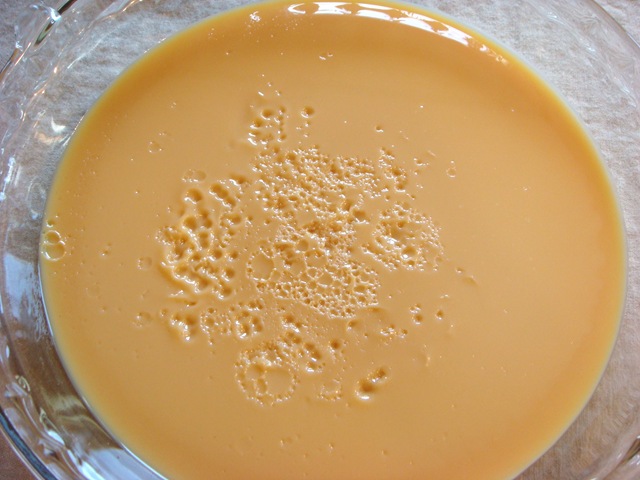
This was my least favorite of all of the dulce de leche that I made. It involves a water bath, and for some reason, I am severely water-bath-challenged. My foil-wrapped cheesecakes cooked in a water bath always end up a soggy mess. So I go to great lengths to avoid sloshing boiling water around in my oven. But for the sake of science, I put on my big girl pants and faced my fear. Once. Not again.

The instructions for making this are fairly simple. First I will include what you should do. Then I will share, by sad experience, what you should never do.

    1. Copy of DSC02392 Preheat oven to 425°F.
    1. Pour one can of sweetened condensed milk into a glass pie plate. Cover the pie plate securely with foil.
    2. Place foil-covered pie plate in a larger baking pan. (I used the bottom half of a broiler pan.)
    3. DSC02400Place the pans on an oven rack and add hot water until it reaches the halfway mark of the pie plate.
    4. Bake for 60-90 minutes, adding more water if necessary

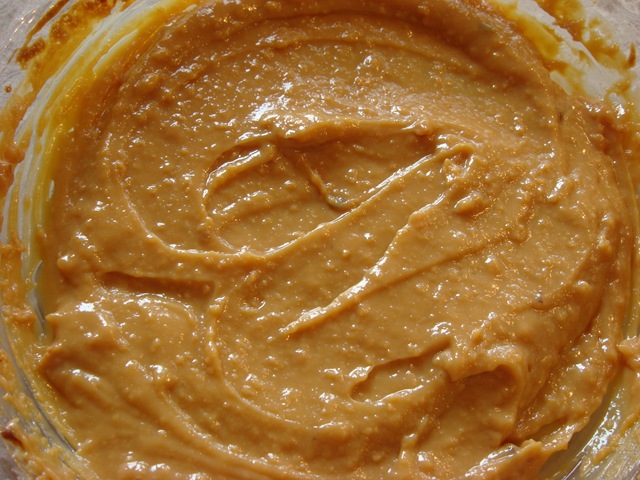
It all seems simple enough, right? Up to that point everything was great. Then I tasted it. It didn’t taste bad, it just still tasted like a can of sweetened condensed milk. Now, don’t get me wrong-I’ve licked my share of Eagle Brand lids (don’t even pretend that you’ve never done it). But it wasn’t rich, decadent, creamy caramel. So I put the foil back on (not a fun adventure) and cooked it for another 30 minutes (2 hours total now). Still not what I was hoping for. So now for the don’t list:

  • DON’T take a broiler pan with boiling hot water out of the oven. It will slosh. All over. Let it cool in the oven before removing.
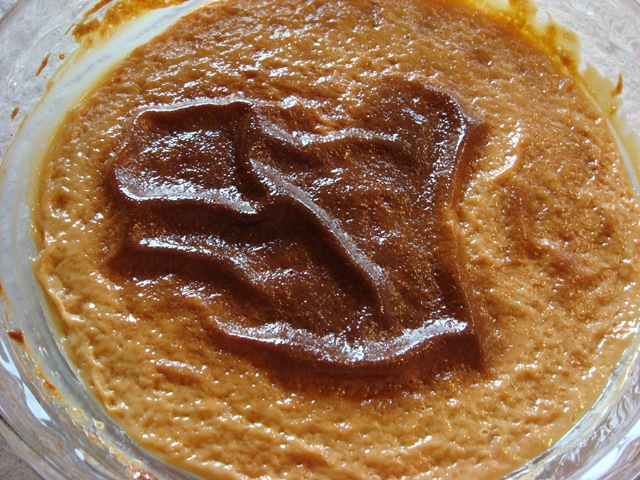
  • DSC02459When your caramel isn’t dark enough, DON’T remove the foil and put it back in the oven. Bad plan.
  • However, once you have burned the top of your dulce de leche, DO pick off the burnt pieces and eat it anyway.

DSC02461 .

DOUBLE BOILER

(from a can, but not still in the can)

DSC02445

This method went much better for me than the oven method, but I still wasn’t thrilled with the taste of the final product. I cooked it twice as long as recommended, and it still had a very milky taste.

  1. DSC02375 Pour one can of sweetened condensed milk into the top of a double boiler.
  2. Fill the bottom of the double boiler with water and bring to a boil.
  3. DSC02438 Cover pan and cook over low heat for 50-60 minutes (I cooked it for 100 minutes to get this consistency).
  4. Stir mixture occasionally, until thick and caramel-colored.

.

.

.

Both of these methods produced an edible dulce de leche, but it just wasn’t the same quality as that made from pressure-induced caramelization (not sure that’s a real word?). The milk taste was still very evident in the end product. But if you don’t want to risk exploding cans, these are the methods for you. For me, I’ll take my chances!

Tomorrow- my last two experiments with Dulce de Leche, and two of my very favorites!


Leave a comment

Filed under Condiments/Sauces, Desserts