
Monday nights at our house are “Family Night”. This is a definite No Empty Chairs event in our home. We work very hard to keep everyone’s schedule clear on Monday nights. Family Night is a time when we gather together for some good old fashioned family fun and bonding. Everyone has an assignment on Family Night and it rotates weekly. Assignments include everything from saying a prayer, to choosing a song, giving a short lesson or message, choosing the family game, to everyone’s favorite: making a treat. This week it was Brian’s turn to make the treat, but he is usually pretty good at delegating this responsibility (for which everyone is grateful, or we would be eating microwave popcorn whenever his turn came around). As he is also still recovering from the effects of swine flu, I took on his treat responsibility this week.
I recently bought a bushel of apples from a produce auction (many thanks Cynthia!), so we have been trying out some fun new apple recipes. The recipe for this pie comes from Dawn Viola, a winner in this year’s Crisco National Pie Championship for her Vanilla-Vanilla Bean Roasted Apple Pie. (Which is kind of funny, because she uses no shortening in her recipe!) I simplified and modified it some for the dessert I made tonight (I will try it again another time when I have whole vanilla beans). The resulting pie was wonderful: a filling of cinnamon spiced apples that was not too runny and an especially flaky all-butter crust.
The secret to making the dough flaky is to keep your ingredients and equipment as cold as possible. Dawn suggests putting your ingredients, bowls and food processor blade in the freezer for 15 minutes before starting.
To make the pie crust, combine the chilled flour, sugar, and salt in a food processor; pulse to mix. Add butter cubes and pulse until the mixture resembles coarse meal with pea-sized pieces of butter. Add the vinegar (cold) and vanilla extract and pulse to mix. Add one tablespoon of water at a time (make sure it is ice-cold), pulsing until the mixture begins to hold together. If you pinch some of the dough, it should stick together in your hand. Add more water if necessary. Dough should be slightly crumbly, but hold together when pinched.
Divide the dough into two equal parts and shape into two round discs. Wrap in plastic wrap and refrigerate for at least one hour.
I got a lot of help with the apple filling. LittleJ loves to help out in the kitchen! She is now my official apple peeler.
 Peel and slice about 12 apples (8 cups of sliced apples). Preheat your broiler. Place apples, cinnamon and 2 tablespoons brown sugar in a roasting pan; toss apples to coat.
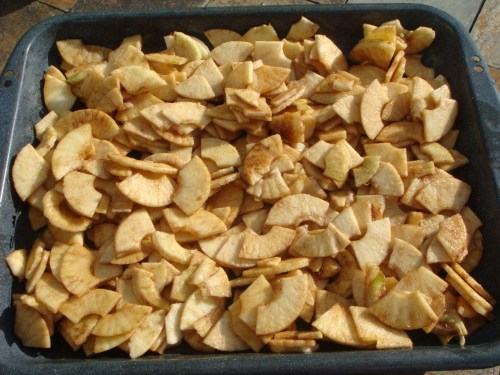 Broil until the apples begin to brown. Watch carefully so that your apples don’t burn. Stir once or twice. Remove apples from the oven when they have begun to brown, but are not completely cooked through. Stir in the remaining sugar, flour, Clear Jel and salt. Add the vanilla extract, apple cider and cream; stir. Set aside.
To assemble the pie, place a 9” pie plate into the freezer. Remove the pie crust dough from the refrigerator and let sit at room temperature for 5 – 10 minutes, or just long enough for it to become easy to roll, but still chilled. Roll dough into a 12” circle on a lightly floured surface. Place in the bottom of the chilled 9” pie plate. Return to the refrigerator to chill. Roll out the second piece of dough into a 12” circle on a lightly floured surface.
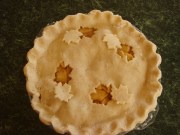
Remove pie plate from the refrigerator. Fill with apples. Dot top of apples with 2 Tbs butter. Place top crust on top of the apples and pinch the top and bottom edges together to seal. Flute edge, if desired, and make a few air vents around the top of the pie. I used a cute little maple leaf cookie cutter to make my vents.
Lightly brush the top and sides of the pie with an egg wash. Sprinkle with coarse sugar.
Bake at 400° F for 30 minutes. Cover edges with aluminum foil or a pie shield if edges are browning too quickly. Cook for another 15 minutes. Check pie every 7-10 minutes, cooking until the crust is golden brown and flaky.
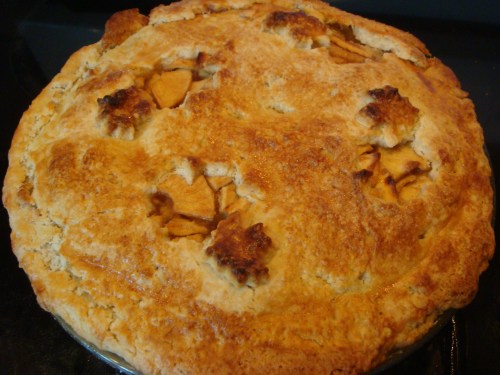
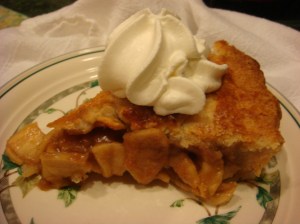
Cool pie for at least two hours before cutting and serving. Serve with whipped cream or vanilla ice cream.
RECIPE:
Apple Pie
All-Butter Pie Crust (for double pie crust)
Filling:
8 cups peeled, cored, sliced apples (about 12 Granny Smith)
2 tsp ground cinnamon
1 cup brown sugar
3 Tbs flour
2 Tbs Clear Jel (or 1 additional Tbs flour)
1 tsp salt
½ cup apple cider
1 tsp vanilla (or seeds from 1 vanilla bean, split and scraped)
1 Tbs heavy cream or ¼ cup sour cream
Egg Wash:
1 egg
1 Tbs cream
Coarse sugar
Prepare pie crust as directed for a double crust.
Filling: Preheat the broiler. Add apples, cinnamon and 2 tablespoons of the brown sugar to a roasting pan; stir. Broil until the apples begin to brown. Watch carefully so that your apples don’t burn. Stir once or twice. Remove apples from the oven when they have begun to brown, but are not completely cooked through. Stir in the remaining sugar, flour, Clear Jel, and salt. Add the vanilla, apple cider, and cream (or sour cream); stir. Set aside.
To assemble the pie, place a 9” pie plate into the freezer. Remove the pie crust dough from the refrigerator and let sit at room temperature for 5 – 10 minutes, or just long enough for it to become easy to roll, but still chilled. Roll dough into a 12” circle on a lightly floured surface. Place in the bottom of the chilled 9” pie plate. Return to the refrigerator to chill. Roll out the second piece of dough into a 12” circle on a lightly floured surface.
Remove pie plate from the refrigerator. Fill with apples. Dot top of apples with 2 Tbs butter. Place top crust on top of the apples and pinch the top and bottom edges together to seal. Flute edge, if desired, and make a few air vents around the top of the pie.
Gently whisk the egg and cream in a small dish. Lightly brush the egg wash over the top of the pie and along the edges. Sprinkle with coarse sugar.
Bake at 400° F for 30 minutes. Cover edges with aluminum foil or a pie crust shield if edges are browning too quickly. Cook for another 15 minutes. Check pie every 7-10 minutes, cooking until the crust is golden brown and flaky. Cool pie for at least two hours before cutting and serving. Serve with whipped cream or vanilla ice cream.
NoEmptyChairs.me
All Butter Pie Crust
2 ½ cups flour
3 Tbs sugar
2 tsp salt
1 ¼ cups unsalted butter, cut into ½” cubes
1 Tbs white vinegar
1 tsp vanilla extract (or seeds from 1 vanilla bean, split and scraped + 1 Tbs vanilla powder)
6-8 Tbs ice water
Chill ingredients, bowls and food processor blade in the freezer for about 15 minutes. Combine flour, sugar, and salt in a food processor; pulse to mix. Add butter cubes and pulse until the mixture resembles coarse meal with pea-sized pieces of butter. Add the vinegar (cold) and vanilla extract and pulse to mix. Add one tablespoon of water at a time (make sure it is ice-cold), pulsing until the mixture begins to hold together. If you pinch some of the dough, it should stick together in your hand. Add more water if necessary. Dough should be slightly crumbly, but hold together when pinched.
Divide the dough into two equal parts and shape into two round discs. Wrap in plastic wrap and refrigerate for at least one hour.
Remove the pie crust dough from the refrigerator and let sit at room temperature for 5 – 10 minutes, or just long enough for it to become easy to roll, but still chilled. Roll dough into a 12” circle on a lightly floured surface. Place in the bottom of a chilled 9” pie plate. Return to the refrigerator to chill. Roll out the second piece of dough into a 12” circle on a lightly floured surface.
Fill with desired filling and bake as directed in pie recipe.
Adapted from Dawn Viola
NoEmptyChairs.me


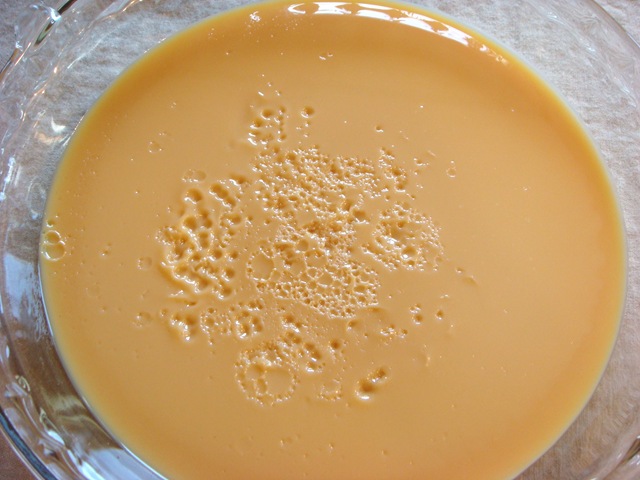
 Preheat oven to 425°F.
 Place the pans on an oven rack and add hot water until it reaches the halfway mark of the pie plate.
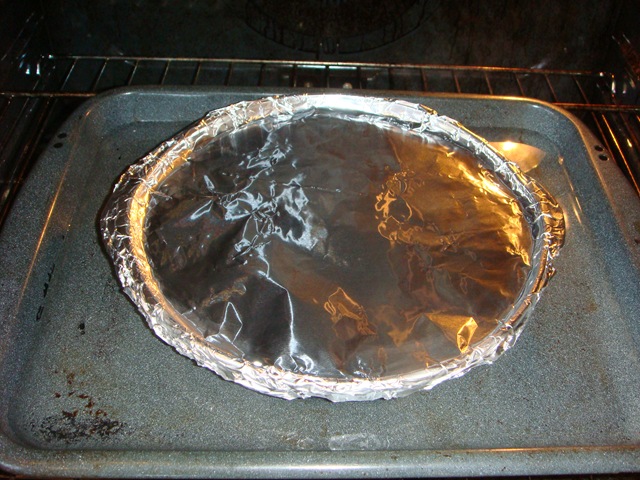
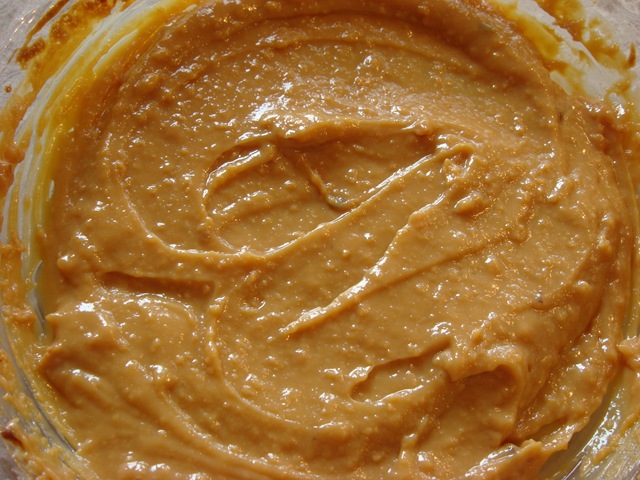
 When your caramel isn’t dark enough, DON’T remove the foil and put it back in the oven. Bad plan.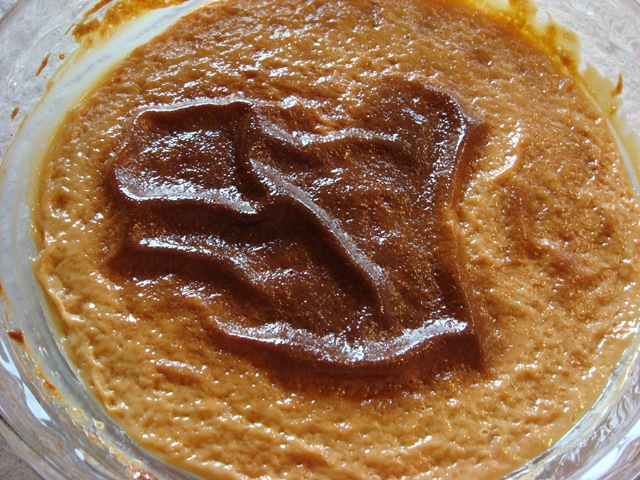
 .
.
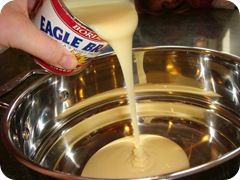 Pour one can of sweetened condensed milk into the top of a double boiler.
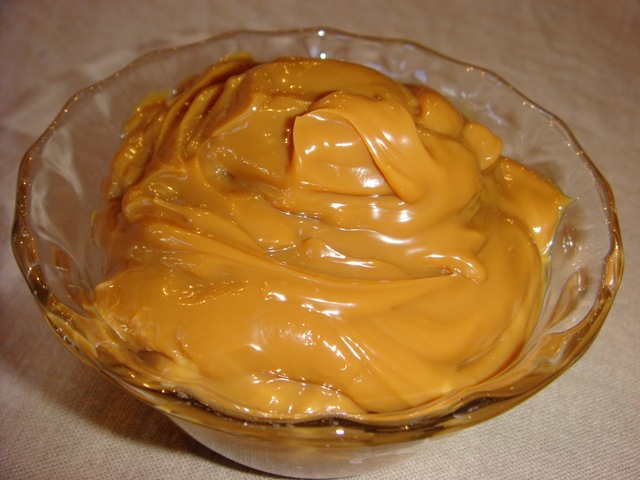
 Cover pan and cook over low heat for 50-60 minutes (I cooked it for 100 minutes to get this consistency).


 Unopened cans can be stored on a pantry shelf (use a marker to label cans). Opened cans need to be refrigerated.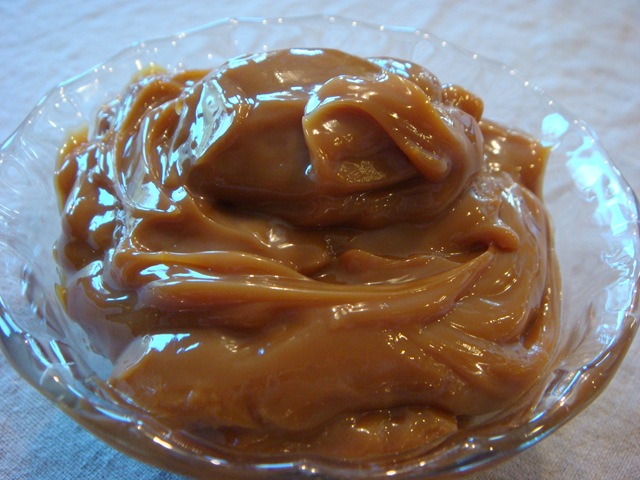















 No Empty Chairs