Dulce de Leche (Six Ways) PART THREE

DSC02455

Here we are at the last installment of making your own Dulce de Leche. You should definitely be feeling the sugar-rush effects now. Today we move into slightly more involved ways of making Dulce de Leche. Try PART ONE and PART TWO for some easier preparations. These last two methods take a little bit more effort, but are well worth it (every now and again, at least). They also involve a few “special equipment” items.

Neither of today’s methods involve unopened cans or water baths, so all is safe. Kind of. Unless you count the possibility of botulism. But we will get into that in a minute. Scroll to the bottom for my final recommendations.

Today we are looking at making dulce de leche:

  • in jars in a PRESSURE CANNER
  • HOMEMADE

.

PRESSURE CANNER

(from a can but sealed in jars)

DSC03704.JPG-2

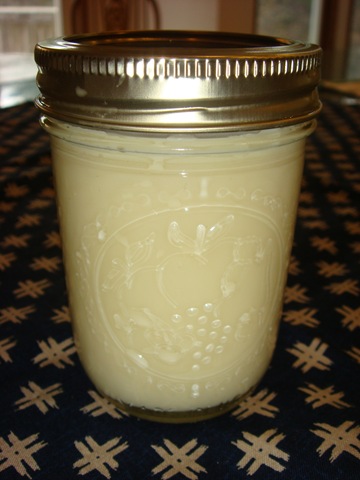
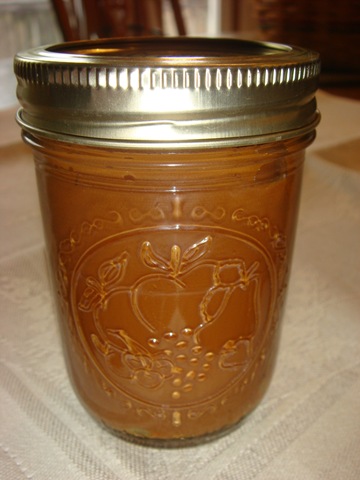
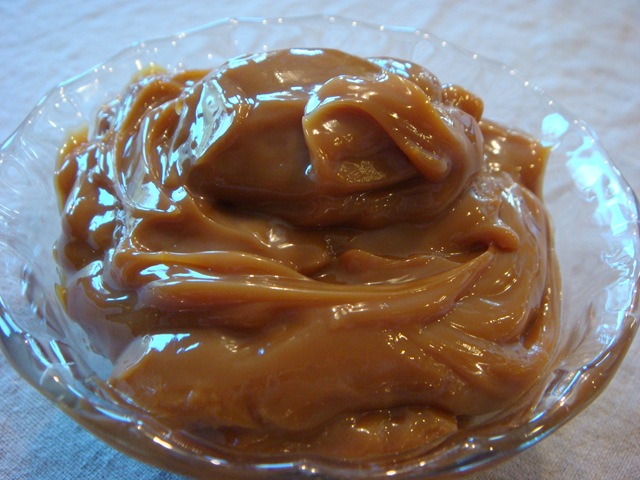
In trying this method, I was hoping for the same taste as the boiled unopened cans. But the cans do not come out of a boiling water bath looking very attractive. So how to present these as attractive gifts? Pressure canning is what I came up with. This is another method with a big DISCLAIMER. The USDA does NOT recommend canning milk products. I did find several sites giving instructions (not USDA approved) for canning regular milk and cheese. Granted, most of these were homesteading sites. So I am throwing caution to the wind and trying it. I figure that on my side in the not-ending-up-with-botulism argument are the following points:

  • I am starting with an already canned milk product, not fresh milk.
  • There is so much sugar in sweetened condensed milk that it would take a lot to make it spoil.
  • I have canned meat successfully, and it is approved by the USDA if using a pressure canner.
  • Butter can be canned, and it is a milk product.

These are my justifications for making this and letting the jars sit on a shelf in my basement. As part of this ongoing experiment, I will force myself to open a jar of this dulce de leche every month or so to make sure they are still edible. But my official recommendation to you is to refrigerate these jars after canning them. Then there is no possible food-safety issue.

Also, please refer to the instruction manual for your specific pressure canner before attempting this recipe. I am including the basic instructions for using mine. DO NOT USE A BOILING BATH CANNER. THAT WILL DEFINITELY EARN YOU A CASE OF FOOD POISONING.

  1. Wash canning jars (a quick run through the dishwasher is a good way to sanitize them). Place new canning lids in a small pan of very hot water (bring water to a boil, then remove from heat and add lids).
  2. ODSC03600pen sweetened condensed milk cans and pour into canning jars, leaving 1/2” headspace. (Try not to lick the remaining sweet milk off of the can lids now-you don’t want to incorporate any germs into the jars. There will be plenty of time for licking when the jars are processing.)
  3. Wipe rims and edges of jars with a damp cloth to remove any milk that dribbled.
  4. Place lids and rings on jars.
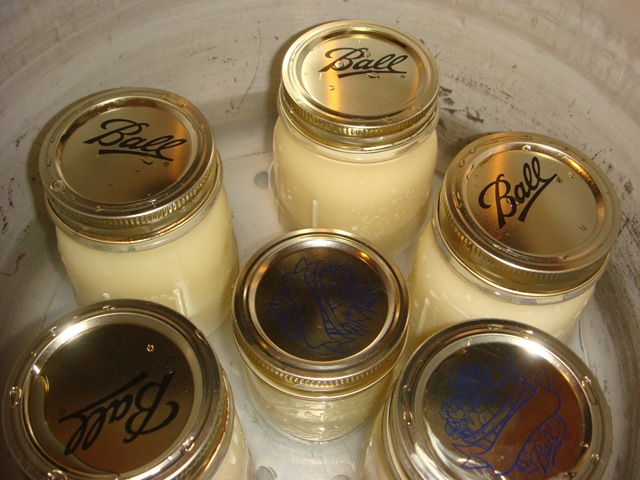
  5. DSC03602Place filled jars on a rack in a pressure canner. Add 3 quarts of room temperature water. DO NOT BRING WATER TO A BOIL BEFORE ADDING JARS. Since you are not doing a “hot pack” (hot jars; hot filling; hot water), DSC03585the jars WILL break if you place them directly into boiling water. Then you end up with a very large pot full of sticky, sugar milk/water. Leaving you to clean all of the other jars and the pot and start over. Not fun.
  6. Place the lid on the pressure canner and bring the water to a boil over high heat.
  7. DSC03606After you have a steady steam flow through the vent pipe for 10 minutes, place the pressure regulator on the vent pipe.
  8. Continue to cook on high until pressure reaches 15 lb.
  9. Lower heat to maintain a constant 15 lb pressure. Keep an eye on the pressure gauge and adjust heat to maintain 15 lb of pressure. Cook for 20 minutes at 15 lb pressure. I used both pint and half-pint jars, and they both came out the same after 20 minutes.
  10. Turn off stove and remove pressure canner from heat. DO NOT OPEN. Let the pressure drop until the air vent/cover lock has completely dropped and no steam escapes when the pressure regulator is tilted (this took about 30 minutes for mine).
  11. DSC03611 When pressure is completely reduced, remove pressure regulator and open canner. Remove jars and set on the countertop on a clean towel.
  12. Let sit for 24 hours. Check seal. Refrigerate for added food safety.

.

.

.

.

HOMEMADE

(no cans here)

DSC03684

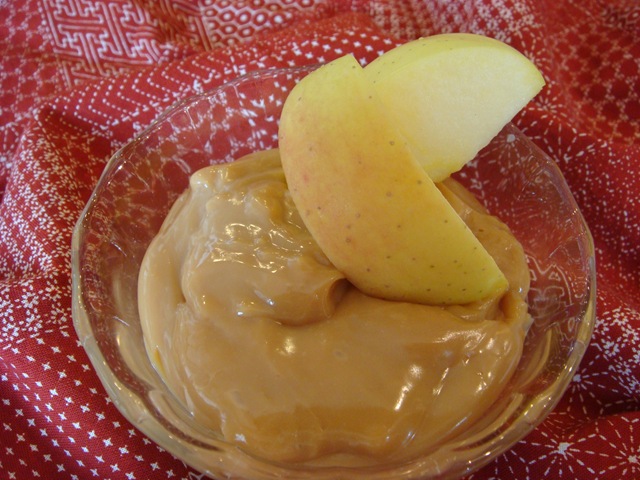
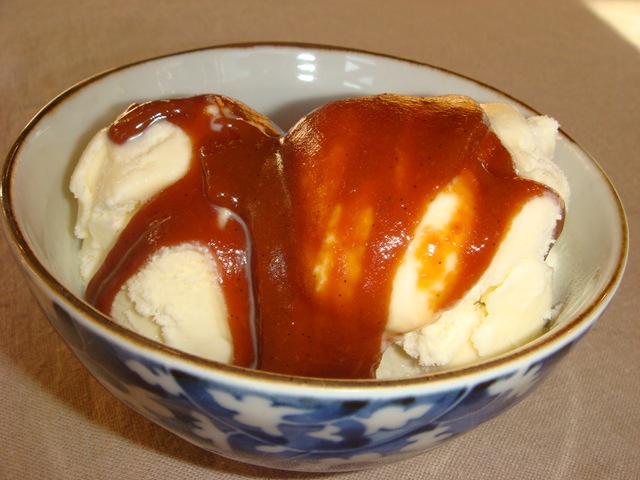
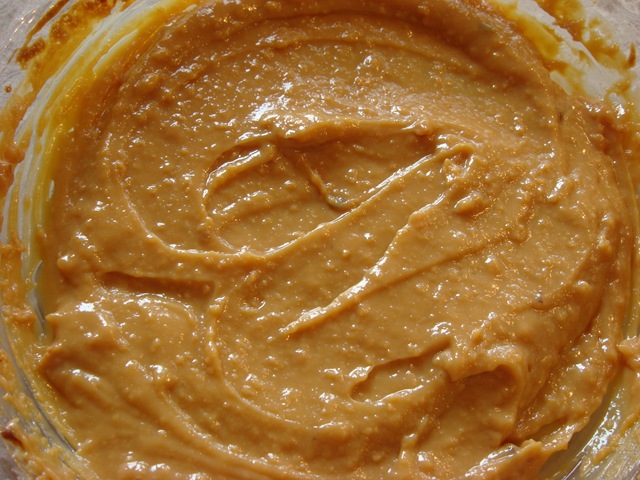
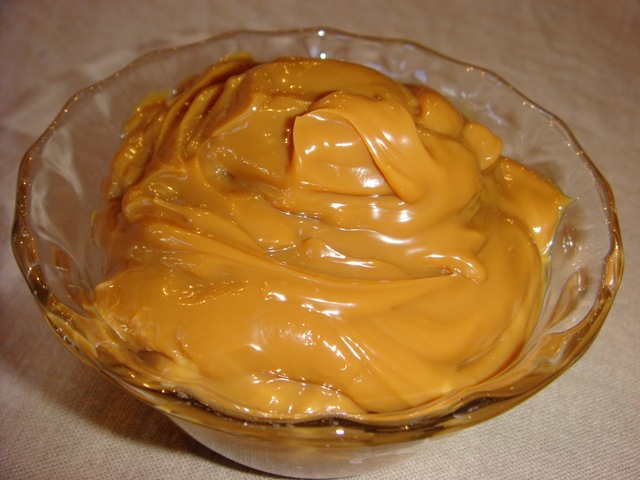
This is the first “recipe” for dulce de leche that I’ve made with actual ingredients. This is adapted from a recipe from Alton Brown. It is a lot more time consuming than any of the other methods, but is it ever worth it! This was truly decadent! Don’t you just love the vanilla bean flecks? As the other methods produced a caramel that was more of a dipping or spreading consistency, I wanted this one to be one that I could pour. DSC03755 On ice cream, for example. The only tricky part of this recipe is knowing when to remove the dulce de leche from the heat. Leave it too long and you end up with caramels suitable for cutting (not all bad either) and more susceptible to turning “sugary”. Don’t cook it long enough and you end up with a brown-colored-sweet-milky syrup. Not really dulce de leche.

The only two drawbacks to this method are the time involved (lots of standing at the stove stirring the pot), and the fact that you can only make one batch at a time, which will need to be refrigerated.

Ingredients:

  • 4 cups (1 quart) whole milk (don’t skimp here!)
  • 1 ½ cups granulated sugar
  • ½ tsp baking soda
  • 1 vanilla bean, split

Preparation:

  1. Combine the milk and sugar in a heavy saucepan.
  2. Bring to a boil over medium heat. Do not stir.
  3. DSC02526 Remove from heat and use a skimmer to remove foam (a spoon or small ladle will work if you don’t have a skimmer).
  4. Add baking soda and split (but not scraped) vanilla bean to the pan.
  5. DSC02532Cook, uncovered, over low heat for one hour, stirring often and skimming foam as necessary.
  6. Remove vanilla bean and continue to cook, stirring constantly, until mixture reaches desired thickness.  This will take about 60 minutes, depending on how thick you want your caramel. It will burn easily at this point, so be attentive!
  7. DSC03652 The dulce de leche is close to done when a spoon dragged through the mixture leaves a trail. It will thicken a lot as it cools. Test for consistency by dropping a small spoonful into a cup of ice water, or by placing a few drops on a plate that has been placed in the freezer.
  8. The original recipe calls for straining through a fine mesh strainer, but I skipped this step and it was still nice and smooth.

DSC03755

Concluding Thoughts:

While this was a fun experiment, it is not recommended for your waistline. Thank goodness I had a recovering swine flu victim (who was down 15 pounds) that I could push this onto to “test” for me. He is back up to normal weight now. You’re welcome, Brian!

My recommendations:

The homemade dulce de leche was definitely superior to the ones made with sweetened condensed milk. But I am likely to only make this on special occasions, when I plan on eating it directly on top of something where the flavor will really shine (and not incorporated into a recipe-that would be a huge waste). It is pretty time consuming, as it needs to be watched (and sometimes stirred) throughout the entire process.

The pressure canner method is a great way to prepare dulce de leche that you plan on giving to friends. Great flavor.

I didn’t care for the oven method at all (no more oven water baths for me), and was only slightly more impressed with the double boiler method. But I may have to give that one another chance.

Practically, the stovetop and crock pot varieties were easiest to make and the best tasting (non-homemade) varieties. They were easy to prepare, and I love that you can do a bunch of cans at one time, and then have them available to grab out of your pantry any time.

The crock pot version gets my overall best pick. That will be my go-to dulce de leche from now on. But the homemade version wins hands down on flavor. So it will definitely have a place in my recipe files.


5 Comments

Filed under Condiments/Sauces, Desserts

Dulce de Leche (Six Ways) PART TWO

Copy of DSC02455

Yesterday we began the journey into dulce de leche and the many ways to prepare it at home. PART ONE included the first two methods that I tried (cooking an unopened can on the STOVETOP and in a CROCK POT), and I had no exploding cans and delicious dulce de leche!

The next two methods that I tried were much less risky, but as is almost always the case in that risk/reward relationship, I didn’t like these two nearly as well. They both involved more work for what I thought was an inferior result. But maybe you will have better success.

On the menu today are dulce de leche made in the:

  • OVEN
  • DOUBLE BOILER

.

OVEN

(from a can, but not still in the can)

DSC02418

This was my least favorite of all of the dulce de leche that I made. It involves a water bath, and for some reason, I am severely water-bath-challenged. My foil-wrapped cheesecakes cooked in a water bath always end up a soggy mess. So I go to great lengths to avoid sloshing boiling water around in my oven. But for the sake of science, I put on my big girl pants and faced my fear. Once. Not again.

The instructions for making this are fairly simple. First I will include what you should do. Then I will share, by sad experience, what you should never do.

    1. Copy of DSC02392 Preheat oven to 425°F.
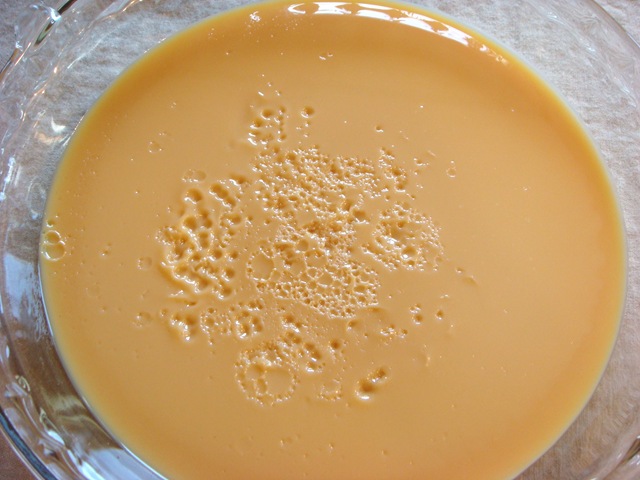
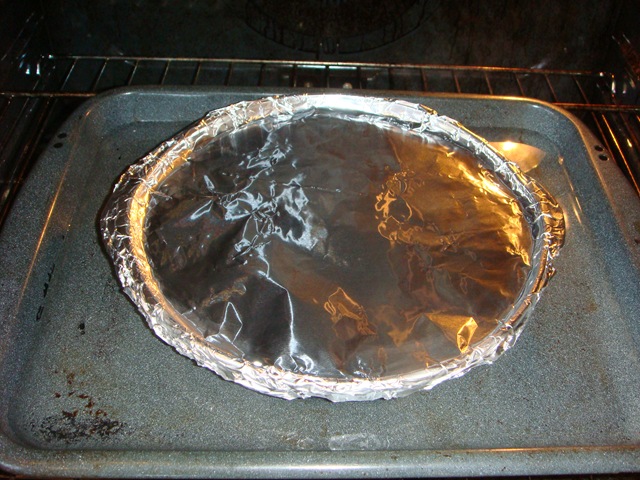
    1. Pour one can of sweetened condensed milk into a glass pie plate. Cover the pie plate securely with foil.
    2. Place foil-covered pie plate in a larger baking pan. (I used the bottom half of a broiler pan.)
    3. DSC02400Place the pans on an oven rack and add hot water until it reaches the halfway mark of the pie plate.
    4. Bake for 60-90 minutes, adding more water if necessary

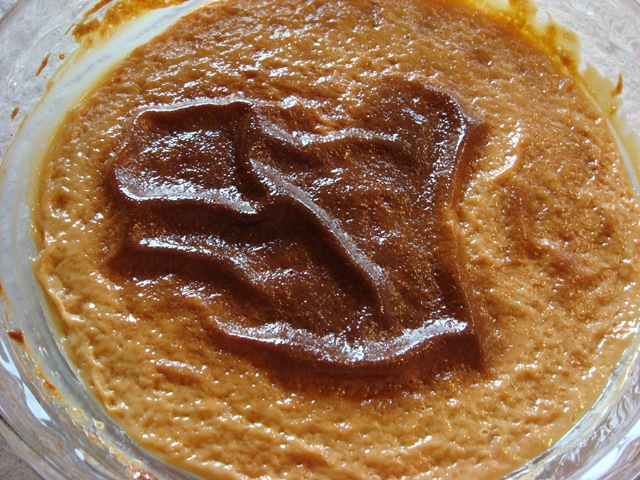
It all seems simple enough, right? Up to that point everything was great. Then I tasted it. It didn’t taste bad, it just still tasted like a can of sweetened condensed milk. Now, don’t get me wrong-I’ve licked my share of Eagle Brand lids (don’t even pretend that you’ve never done it). But it wasn’t rich, decadent, creamy caramel. So I put the foil back on (not a fun adventure) and cooked it for another 30 minutes (2 hours total now). Still not what I was hoping for. So now for the don’t list:

  • DON’T take a broiler pan with boiling hot water out of the oven. It will slosh. All over. Let it cool in the oven before removing.
  • DSC02459When your caramel isn’t dark enough, DON’T remove the foil and put it back in the oven. Bad plan.
  • However, once you have burned the top of your dulce de leche, DO pick off the burnt pieces and eat it anyway.

DSC02461 .

DOUBLE BOILER

(from a can, but not still in the can)

DSC02445

This method went much better for me than the oven method, but I still wasn’t thrilled with the taste of the final product. I cooked it twice as long as recommended, and it still had a very milky taste.

  1. DSC02375 Pour one can of sweetened condensed milk into the top of a double boiler.
  2. Fill the bottom of the double boiler with water and bring to a boil.
  3. DSC02438 Cover pan and cook over low heat for 50-60 minutes (I cooked it for 100 minutes to get this consistency).
  4. Stir mixture occasionally, until thick and caramel-colored.

.

.

.

Both of these methods produced an edible dulce de leche, but it just wasn’t the same quality as that made from pressure-induced caramelization (not sure that’s a real word?). The milk taste was still very evident in the end product. But if you don’t want to risk exploding cans, these are the methods for you. For me, I’ll take my chances!

Tomorrow- my last two experiments with Dulce de Leche, and two of my very favorites!


Leave a comment

Filed under Condiments/Sauces, Desserts

Dulce de Leche (Six Ways) PART ONE

DSC02455

So what do you do when swine flu rages in your house for SIX WEEKS,  often leaving you housebound with feverish, coughing demanding children (and one spouse), eventually leading to bronchitis and pneumonia?  I mean besides trying to hide Tylenol in Gatorade for the medicine-hating little people in the house.

What else – experiment with Dulce de Leche!

With hours of time on my hands, it seemed like the perfect opportunity to play with milk, sugar, vanilla beans and lots and lots of sweetened condensed milk.  Eagle Brand sweet milk was on sale 2/$3, so I stocked up! I will admit to some embarrassment explaining to the check-out girl why I had 20 cans of sweet milk in my cart. Can’t people just mind their own business in the grocery store?

The following post is not for the faint of heart, or risk-adverse home chef. We are talking about risking exploding cans, shattered jars, and possibly a little botulism thrown in for good measure. Not to mention the risk of covering your kitchen in oozing-sticky-wonderful-caramel heaven! Or the temptation to sit and eat this stuff straight out the can.

Dulce de Leche (pronounced Dool-say De Lechay) is a caramelized milk that originated in Latin America. Nestle sells it premade in a can, often found in the ethnic section of the grocery store (by the Latin foods). But, as I have found, it is very easy and much cheaper to make at home. I will show you how to make it SIX different ways, so there is something here for everyone, even those who are not willing to risk exploding cans. And for the true gourmet, who wouldn’t dream of starting with a can, there is even a homemade option (which really is to die for).

In short the six ways that I tried are:

  • STOVETOP (in the can)
  • CROCKPOT (in the can)
  • OVEN (from a can, but not still in the can)
  • DOUBLE BOILER (from a can, but not still in the can)
  • PRESSURE CANNER (from a can, but in a jar)
  • HOMEMADE (no cans here)

DSC02403

This is “the can”. Who knew that such an innocuous looking can could have the potential for such greatness!

So, on to the results. You might want to get up and make yourself a snack first; this is an exhaustive study of the process of turning milk and sugar into one of the most wonderful creations ever! Today I will share the first two (danger of exploding cans) methods. Besides the taste, what I love about these two methods is that you can make a lot at one time. And then the cans are shelf stable. They sit waiting, patiently, for when you need a can for that perfect recipe (and you don’t have a few hours to whip up fresh dulce de leche) or when the apple on your lunch plate is just calling out for something to dip itself in.

Stay tuned later this week for methods three – six.

.

.

STOVETOP (in the can)

DSC01756

This method is easy, but is only for those who like to flirt with danger. It is actually only dangerous if you forget to check on your water levels, but I will give my disclaimer now that Borden (the company that makes Eagle Brand sweetened condensed milk) does NOT recommend this method for making Dulce de Leche. Since they don’t recommend it, I don’t either (but I will still make it!)

  1. Start with a large stockpot. Place a rack in the bottom of the pot (mine has a steamer insert that I used). Many websites that give this method do not use a rack in the pot. The first time I made it without a rack, and the caramel in the bottom of my cans ended up slightly on the burned side. I did use a terrible thin pot, so if you have a nice thick one, this might not be a problem for you. But the second time around, I used a rack and the caramel cooked evenly through the can. The rack also kept the cans from making terrible noise as the water came to a boil.
  2. DSC01777Remove the labels from your sweetened condensed milk. Place unopened, label-free cans  into the bottom of your stockpot. You can use as many as will fit in one layer in your pot.
  3. Fill pot with room temperature tap water. Cover cans completely with water. The water level should be at least 2 inches above the cans.
  4. Cover the pot and bring to a boil. Reduce heat to a simmer. Cook, covered, for 3 hours.
    ***The water level must remain above the top of the cans. If not—this is when you end up cleaning caramel from exploding cans off of the top of your ceiling and every surface beneath it*** To ensure that you don’t forget that you are cooking when you go off and start another project, set a timer for 30 minutes. Check water level (add more boiling water, if necessary), then set the timer again for another 30 minutes. Continue setting the timer in 30 minute increments until the 3 hours are up.
  5. Remove pan from heat, remove lid, and let water cool for 30-60 minutes before removing cans.
  6. DSC01751.jpgUnopened cans can be stored on a pantry shelf (use a marker to label cans). Opened cans need to be refrigerated.

.

.

.

.

.

.

CROCKPOT (in the can)

DSC02496

As this is another “cooked in an unopened can” method, I will refer you to the disclaimer above. . .  Now that I have not recommended that you use this method, let me tell you how much I loved this! It was easy. easy. easy. And delicious!

  1. Remove labels from sweetened condensed milk cans. Do not open cans.
  2. Place cans in the bottom of a crock pot.
  3. Cover cans completely with room temperature water. **Be sure that water completely covers cans**
  4. Place the lid on the crock pot and cook on low heat for 8 hours. (The water level in my crock pot stayed the same for the entire cooking time, so there was no need to add additional water.)
  5. Turn off crock pot, remove lid and let water cool 30-60 minutes before removing cans.DSC02492
  6. Unopened cans can be stored on a pantry shelf (use a marker to label cans). Opened cans need to be refrigerated.

..

.

.

DSC02503

Both of these methods produced a dulce de leche that was delicious! It was thick and rich and a wonderful caramel color. Of the two, cooking it in the crock pot was the easier method.  Even though it takes a little longer, it was easier than worrying about maintaining water levels. If you do choose to try one of these methods, just remember to keep cans completely covered with water and let the cooking water cool slightly before removing cans. This will help to reduce “temperature shocks” which could cause the cans to burst.

NoEmptyChairs.me


3 Comments

Filed under Canning/Freezing, Condiments/Sauces, Desserts

Shredded Chicken & Cheese Enchiladas

DSC03051

I shredded a crock-pot full of chicken a while ago with the intention of making these enchiladas, but life got the better of me, and I didn’t get around to it until recently. Once you have chicken shredded, these enchiladas go together really quickly. My husband loves these because there are no filler ingredients (rice, beans, etc) just meat and wonderfully creamy cheese.

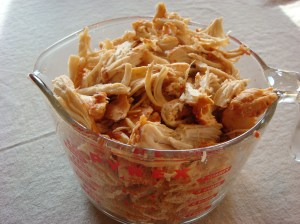
I cooked the chicken in the crock pot with about 1 cup of salsa. You could also use leftover roast chicken or turkey.

DSC02989

.

When the crock pot chicken was tender, I shredded it, using some of the chicken for a chili, some for a soup (details soon), and most of the rest for these enchiladas.

DSC02993

.DSC02996

The filling for the enchiladas uses the chicken, shredded cheddar or Monterey Jack cheese, sauteed onions, garlic, some salsa, and cream cheese (this is what makes them so wonderfully creamy!). You can also add cilantro to the filling, but I didn’t this time. I just used it in the sauce.

To make the enchilada sauce, dump all of the sauce ingredients (see recipe below) into a blender, and blend until smooth.

DSC03000

Place a small amount of sauce in the bottom of a 9×13″ pan.

DSC03004

Roll about 1/3 – 1/2 cup of filling in a tortilla. I used flour tortillas, but you could also use softened corn tortillas.

DSC03007

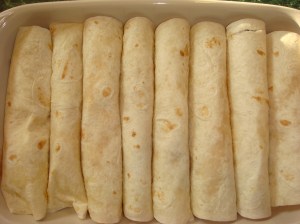
Roll tortillas around filling and place in baking dish. I got 8 filled enchiladas in my pan, plus another 2 that I put in a smaller pan (these 2 extra enchiladas were terribly unappealing, having NO CHEESE in them-how could I possibly end up with a daughter that doesn’t like cheese?)

DSC03011

Cover and bake at 375°F for about 45 minutes, or until hot and bubbly. I love using non-stick foil for covering saucy or cheesy dishes. No sticking! Really.

DSC03029

Uncover and top with additional cheese, chopped green onions and sliced olives. Bake for another 10 minutes.

DSC03038

Serve with sour cream and additional salsa. We also like to have Mexican rice or refried beans on the side.

RECIPE:

Chicken & Cheese Enchiladas

DSC03051

4 cups cooked, shredded chicken
1 onion, chopped and lightly sauteed
2 cloves garlic, minced or ½ tsp garlic powder
8 oz cream cheese, softened
½ cup salsa
1-2 cups shredded cheddar or Monterey Jack cheese
4 Tbs fresh cilantro, chopped (optional)

Sauce:
1 can cream of chicken soup
1 cup milk
½ cup salsa
3 Tbs ketchup
1 Tbs paprika (hot and/or sweet)
1 tsp chili powder
2-3 Tbs fresh cilantro, chopped

Tortillas
1 cup shredded cheese
Sliced black olives (optional)
Chopped green onions (optional)

Preheat oven to 375°F.

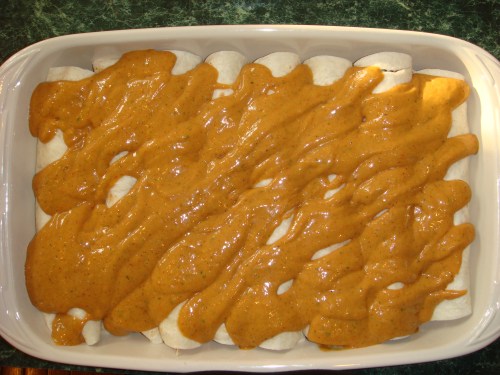
Combine filling ingredients. Blend sauce ingredients in blender until smooth. Place a small amount of sauce in the bottom of a 9×13” pan. Roll filling in tortillas. Place in pan, seam side down. Top with remaining sauce.

Bake, covered, at 375°F for 30-45 minutes, or until cooked through. Uncover.

Sprinkle with cheese, olives, and green onions. Bake, uncovered, 10 minutes longer. Serve with salsa, sour cream, or guacamole, if desired.

Makes 8-10 large enchiladas.

TO FREEZE: Prepare and fill enchiladas. Place on a waxed-paper lined cookie sheet and freeze. Place in freezer bag when enchiladas are completely frozen. Freeze sauce in a separate bag. Freeze cheese in small bag.

TO PREPARE AFTER FREEZING: Thaw sauce and cheese. Place small amount of sauce in a 9×13” pan. Place enchiladas in pan (it is not necessary to thaw enchiladas). Top with sauce. Bake, covered, at 375°F for about 1 hour, or until cooked through. Remove foil and top with cheese, olives and green onion. Bake, uncovered, 10 minutes longer.

NoEmptyChairs.me

3 Comments

Filed under Main Dishes

Sliced Baked Potatoes with Herbs and Cheese

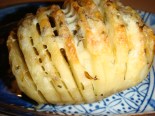
Hasselback Potatoes

A quick post today for a great potato side dish. These have everything I love in a potato dish: butter, crispy edges, fresh herbs, gooey cheese, did I mention butter and cheese?

The recipe at the end has quantities for 4 large potatoes, but this is a recipe I usually don’t measure for. You can use any kind of potato, peeled or unpeeled. I usually use unpeeled, but these red potatoes  had skins that had seen better days, so off they came.

DSC03196

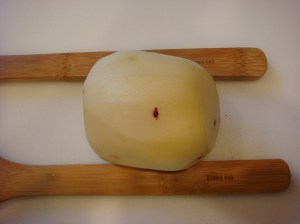
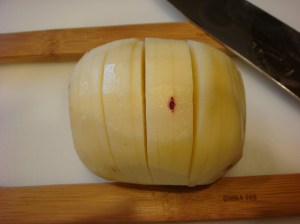
Start by cutting the potatoes into slices, but not all the way through. You want the bottom edge of the potato to remain intact. An easy way to do this is to place wooden spoons on either side of the potato as a cutting guide.

DSC03199

Cut until you hit the handle

Place your sliced potatoes in a baking dish. Melt butter and pour over the potatoes, using your fingers or a fork to get butter in between potato slices. Sprinkle with coarse sea salt (again trying to get some between the slices).

DSC03206

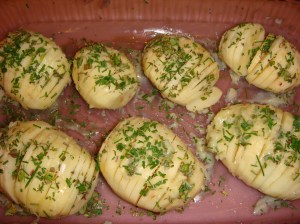
I love using fresh herbs with this, but in the winter I will often use dried Italian seasoning. Push a little between the slices. I used fresh oregano and thyme between the slices this time, and then sprinkled fresh chives over it all. The potato slices will open up more as they cook.

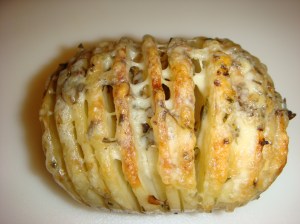
Bake at 400°F for 45 minutes, or until cooked through. Once or twice during cooking, spoon melted butter from the bottom of the pan over potatoes. Sprinkle with fresh grated Parmesan cheese and return to the oven for an additional 10 minutes.

DSC03256

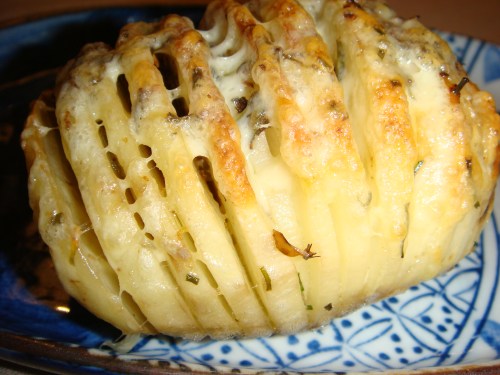
Ooey-gooey-cheesy-crusty-herbed-potato goodness!

RECIPE:

Sliced Baked Potatoes with Herbs and Cheese

Hasselback Sliced Potatoes

4 large baking potatoes
¼ cup melted butter (plan on 1 Tbs per potato)
1 tsp coarse sea salt
2-3 Tbs chopped fresh herbs (or 2-3 tsp dried):
try basil, thyme, oregano, chives, or Italian seasoning
¼ cup fresh grated Parmesan (other cheeses would be good as well)

Wash and dry potatoes; peel if desired. Cut into thin slices, but not all the way through the potato (use the handle of a wooden spoon placed alongside the potato to prevent cutting all the way through). Place potatoes in a baking dish. Sprinkle with butter, salt, and herbs, getting some between each slice.

Bake at 400°F for 45 minutes, or until potatoes are cooked through. Once or twice during cooking, spoon melted butter from the bottom of the pan over potatoes. Top with cheese and bake an additional 10 minutes.

NoEmptyChairs.me

42 Comments

Filed under Side Dishes

How to … Roast Peppers

DSC03063

Lay whole peppers on a foil-lined baking sheet. Brush with olive oil. Broil about 2″ from heating element for 5-10 minutes. Check often! Turn peppers over to blacken both sides.

If you have a gas stove, peppers can also be roasted over a gas flame. Use tongs or a metal skewer to hold pepper directly over the flame.

A third way to roast peppers is on a charcoal or gas grill. Place peppers directly on grate, and turn when blackened. Watch carefully.

DSC03064

Place hot peppers into a brown paper bag. Let cool slightly. Shake bag.

DSC03070

Peel blackened skins from peppers. Discard seeds, if desired.

NoEmptyChairs.me

Leave a comment

Filed under Tips and Tutorials