Category Archives: Tips and Tutorials

Thanksgiving Meal Prep Planning

For me, an enjoyable, stress-free Thanksgiving is all in the advance planning. Best plan: pot-luck meal where you have limited cooking responsibility! But it is still possible to have a low-stress day and prepare the entire meal yourself. With one oven. Here is our menu this year, and the plan for getting it done with the least amount of Thanksgiving Day chaos.

Our Thanksgiving Menu:

Herb Brined Roast Turkey

Gravy

Rolls

Cranberry Sauce

Roasted Garlic Mashed Potatoes

Roasted Garlic Stuffing

Green Beans with Bacon and Almonds

Roasted Sweet Potatoes and Mushrooms

Pumpkin Pie

Cherry Pie

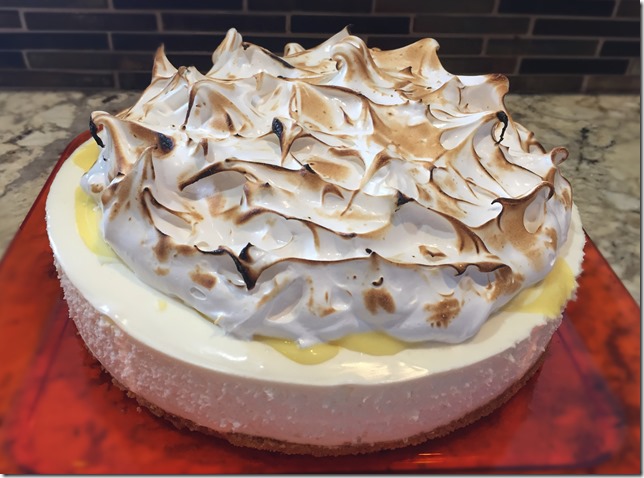
Lemon Meringue Pie

Thanksgiving Gameplan:

  • Monday (or earlier):
    • Make rolls; parbake and freeze
    • Cube bread for stuffing, set out on trays to dry; roast garlic for stuffing and potatoes, refrigerate (see Roasted Garlic Stuffing for full recipe)
    • Eat all of the leftovers in the fridge so you have room for all of your advance preparations and Thanksgiving leftovers! Keep eating leftovers Tuesday and Wednesday until your fridge is empty; no more leftovers? Order pizza.
  • Tuesday:
    • Prepare brine (see Turkey Timetable below)
    • Prepare Make-Ahead Roasted Garlic Mashed Potatoes; refrigerate
    • Make cranberry sauce; refrigerate
  • Wednesday:
    • Add turkey to brine (see Turkey Timetable)
    • Chop vegetables for stuffing; place in Ziploc bags; refrigerate
    • Prepare veges for Roasted Sweet Potatoes & Mushrooms (this is a new recipe I’m trying this year from Kalyn’s Kitchen. It sounds great, but does require a lot of oven space and time, so I am going to try to roast it for half the time on Wednesday, refrigerate, and then finish on Thursday)
    • Cook bacon and toast almonds for the Green Beans with Bacon
    • Make pies
  • Thursday:
    • Prepare stuffing. Cook for 30 minutes in oven. Transfer to crock pot. Keep warm on lowest heat. **Do this before putting the turkey in the oven
    • Prepare and roast turkey (see Turkey Timetable)
    • Remove mashed potatoes from fridge; place in covered casserole dish; let potatoes come to room temperature (I am going to reheat the potatoes in the oven; you could also reheat them in a crock pot on low for several hours)
    • Remove sweet potatoes from fridge and place on baking sheet;cover and let come to room temperature.
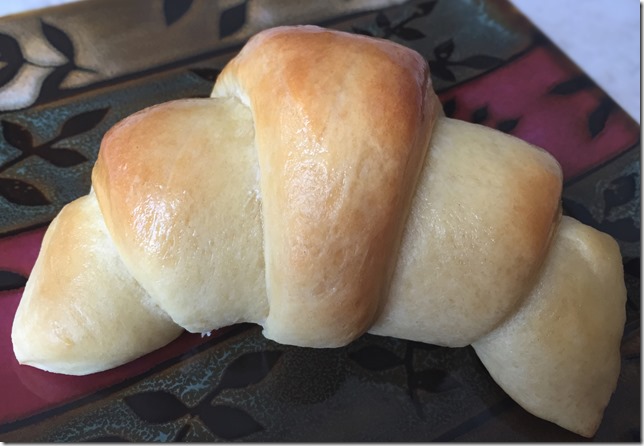
    • Remove rolls from freezer. Place on a baking sheet and cover with foil or plastic wrap.
    • Sit and enjoy family for the next hour or two while the turkey cooks!
    • When turkey is done: remove from oven and let rest for at least 30 minutes.
    • As soon as turkey comes out of oven: mashed potatoes and sweet potatoes go in the oven
    • Make gravy; keep warm on low heat
    • Steam green beans; stir in bacon and almonds (see Bacon Beans for full recipe)
    • While you are preparing beans, have someone else begin to carve the turkey, and kids begin to put food on the table
    • Remove potatoes and sweet potatoes from the oven. Bake rolls for 5-7 minutes, until hot and golden brown.
    • Relax and enjoy!

Thanksgiving Turkey Timetable:

  • Tuesday evening: Prepare brine. Cover and let it sit overnight.
  • Wednesday morning: Add turkey to brine; Let it sit in a cool place (below 40°F) for 12-24 hours (I usually go with close to 24 hours)
  • Thursday (Thanksgiving!):
    • 4 hours before you plan to serve the meal: Remove turkey from brine. Let sit at room temperature for at least 30 minutes
    • 3 ½ hours before eating: Prep turkey and put in the oven. Roast until cooked through (about 2 ½ to 3 hours total)
    • 30 minutes before eating: Remove turkey from oven and let rest for 30 minutes.
    • Serving time: Carve and serve turkey.

4 Comments

Filed under Main Dishes, Tips and Tutorials, Uncategorized

How To . . . Roast Garlic

Roasted garlic adds a wonderful flavor to many dishes: salsa, steamed or roasted vegetables, grilled meats, soups & stews, pastas, mashed potatoes, garlic bread.

Roasting garlic is easy to do (much easier than peeling raw cloves), and can be done with either whole heads of garlic, or individual garlic cloves.

For Whole Garlic Heads:

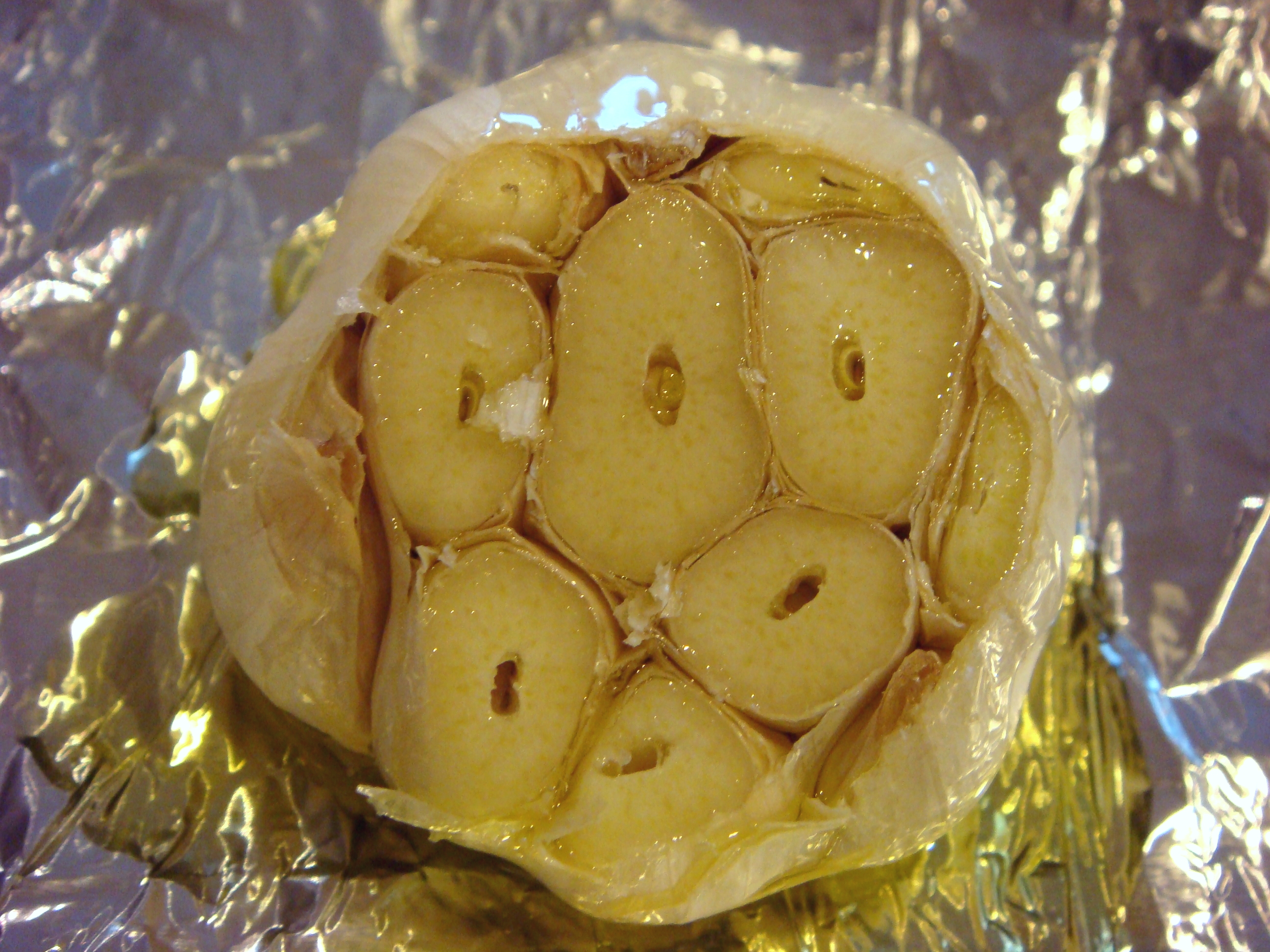
Using a knife, cut off  the top of the head of garlic (about 1/4 to 1/2 inch), just enough to expose the individual cloves of garlic.

Place garlic head on a square of aluminum foil (Large enough to wrap around garlic head). Drizzle each cut garlic head with about 1 Tbs olive oil.

Wrap foil around garlic head and place on a baking sheet. If you are doing a large number of garlic heads at the same time, you could also line a rimmed baking sheet with foil, place garlic heads in the pan and then cover the entire pan with foil, instead of wrapping each garlic head.

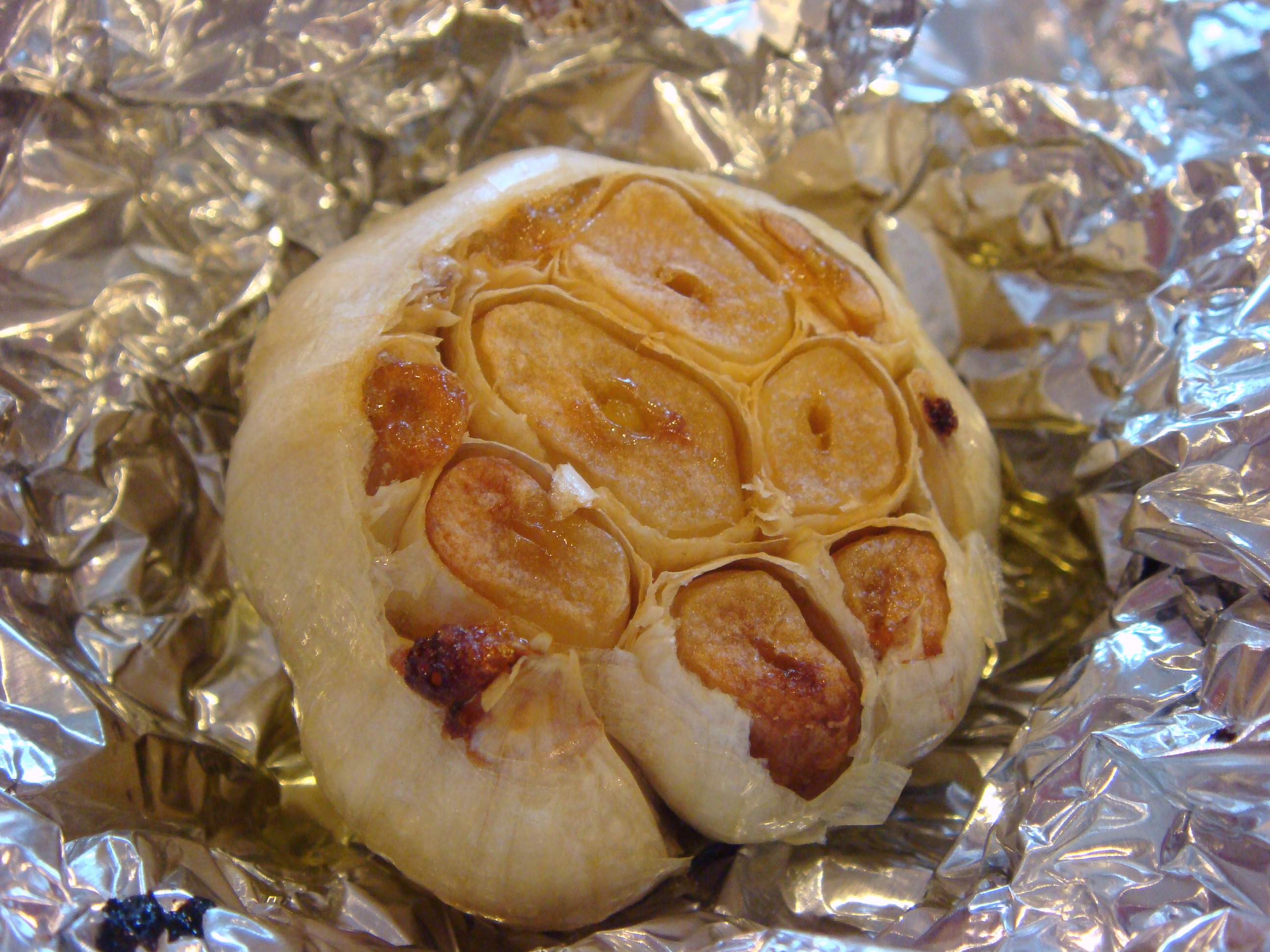
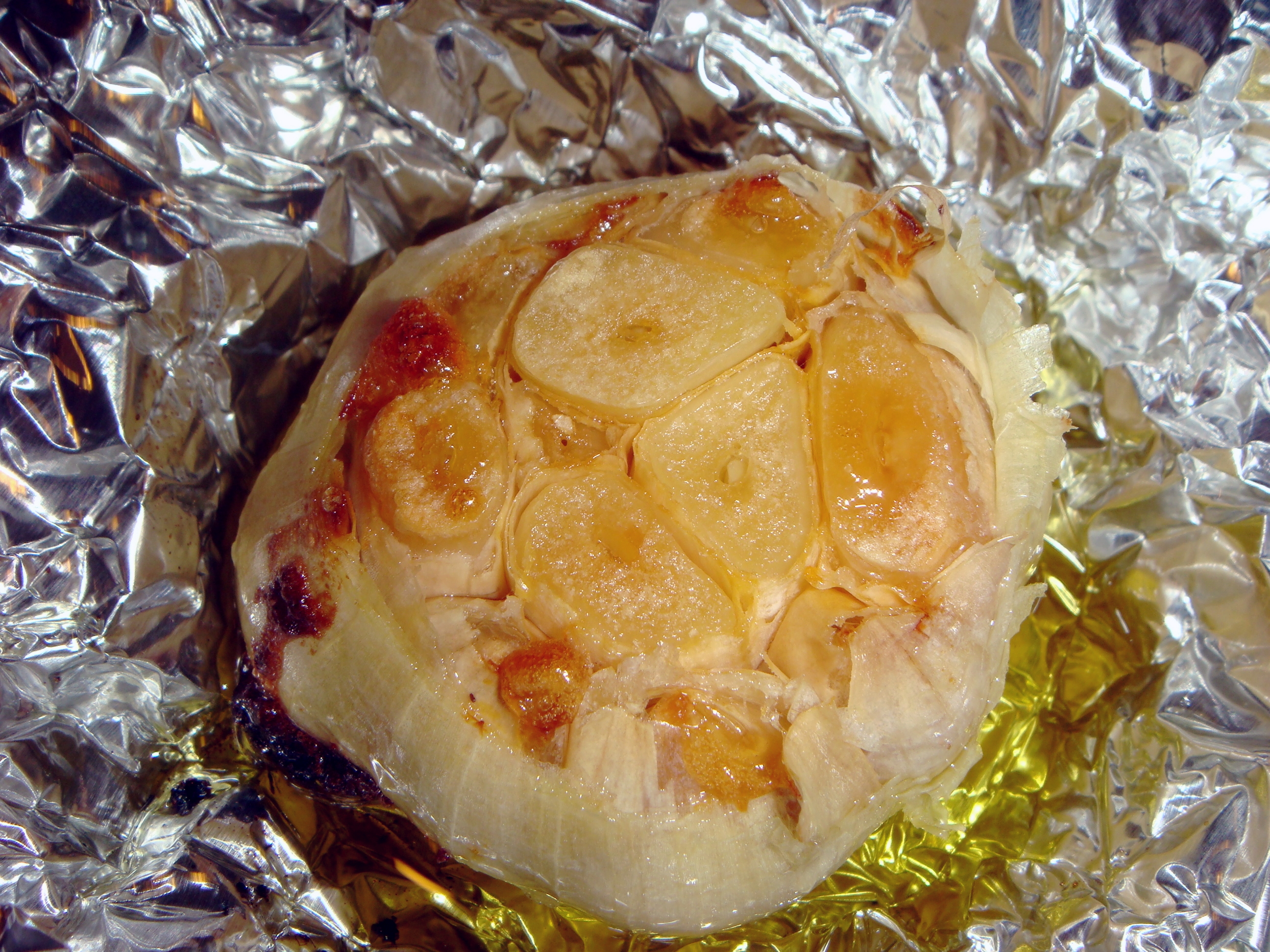
Bake at 400°F for 30-40 minutes. The garlic cloves should be soft and slightly browned.

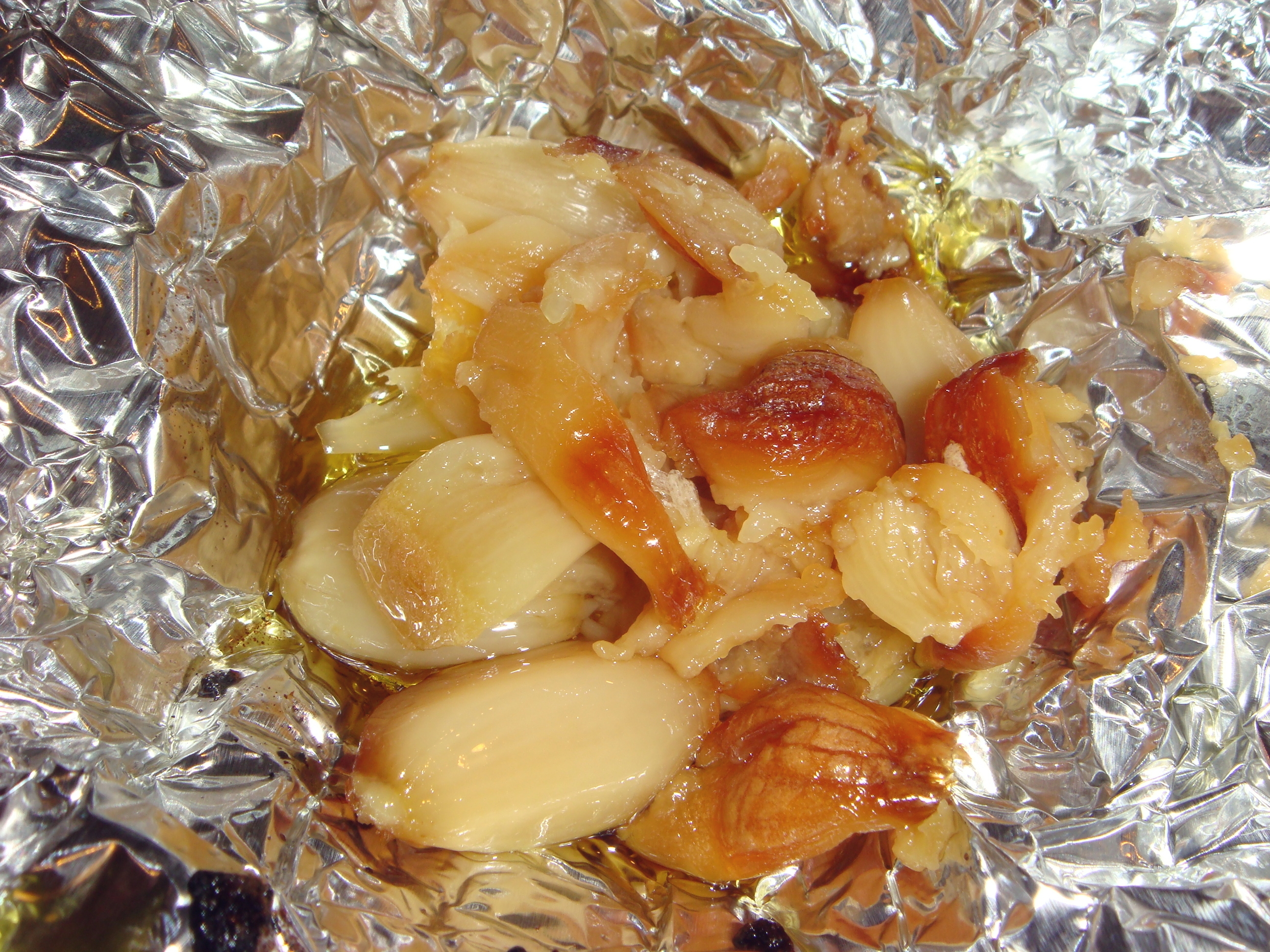
Remove foil, and let the garlic cool slightly. Use the tip of a knife to remove garlic cloves from skins. If the cloves are soft enough, you can also gently squeeze the individual cloves out of the skin of the garlic head.

Empty garlic skin

For Individual Garlic Cloves:

I like to use fresh garlic, but do not like peeling it, and I’m not always a good judge of how many heads to buy for the week. So I buy peeled fresh garlic cloves in 3 lb bags from Costco or Sam’s Club (in the refrigerated produce section):

I definitely can’t use this much garlic before it goes bad, and it really makes the refrigerator reek of garlic. Unless you freeze the whole bag! This has been a perfect solution for me. I throw the entire bag in the freezer (before ever opening it), and then pull out as many cloves as I need for a recipe. They thaw quickly just at room temperature, but you can also microwave them in a small bowl for about 10 seconds, if time is short. No more peeling garlic!

These cloves also work perfectly for roasting.

Place as many cloves of garlic as you want to roast in a small foil-lined oven safe bowl (like a ramekin).  Drizzle with olive oil (about 1 Tbs for 10-15 cloves) and wrap foil around cloves.

Bake at 400°F for 30-40 minutes. The garlic cloves should be soft and slightly browned.

To roast large quantities of garlic, use a larger baking dish or roasting pan. Drizzle garlic generously with olive oil, cover with foil and bake at 400°F. After 30 minutes, remove foil and stir. When you are roasting large amounts of garlic, it may take an additional 20-30 minutes until they are browned.

I roast large quantities of garlic at a time (on a day I can leave the windows open), then freeze it in several 1 cup containers. I always have one container in the refrigerator to use whenever a recipe calls for garlic.

How To Roast Fresh Garlic


For Whole Garlic Heads:

Using a knife, cut off  the top of the head of garlic (about 1/4 to 1/2 inch), just enough to expose the individual cloves of garlic.

Place garlic head on a square of aluminum foil (Large enough to wrap around garlic head). Drizzle each cut garlic head with about 1 Tbs olive oil.

Wrap foil around garlic head and place on a baking sheet. If you are doing a large number of garlic heads at the same time, you could also line a rimmed baking sheet with foil, place garlic heads in the pan and then cover the entire pan with foil, instead of wrapping each garlic head.

Bake at 400°F for 30-40 minutes. The garlic cloves should be soft and slightly browned.

Remove foil, and let the garlic cool slightly. Use the tip of a knife to remove garlic cloves from skins. If the cloves are soft enough, you can also gently squeeze the individual cloves out of the skin of the garlic head.

For Individual Garlic Cloves:

Place as many cloves of garlic as you want to roast in a small foil-lined oven safe bowl (like a ramekin).  Drizzle with olive oil (about 1 Tbs for 10-15 cloves) and wrap foil around cloves.

Bake at 400°F for 30-40 minutes. The garlic cloves should be soft and slightly browned.

To roast large quantities of garlic, use a larger baking dish or roasting pan. Drizzle garlic generously with olive oil, cover with foil and bake at 400°F. After 30 minutes, remove foil and stir. When you are roasting large amounts of garlic, it may take an additional 20-30 minutes until they are browned.

NoEmptyChairs.me

1 Comment

Filed under Appetizers, Canning/Freezing, Condiments/Sauces, Tips and Tutorials

Homemade Yogurt & Granola

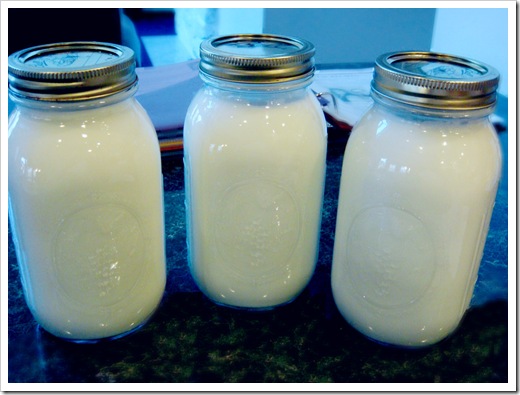
040910 061-1 Within about the last year and a half, I have become quite the fermented milk fan! From kefir to yogurt to lacto-fermented mayonnaise, there is always some kind of milk product sitting out on my counter, working it’s probiotic, yeast-culturing magic; turning plain old milk into something so much more healthy and delicious.

Some of my children find this disgusting, and refuse to touch anything in the fridge that is kept in a Mason Jar. Others have jumped right in and love to drink our daily kefir smoothies, or eat “stirring yogurt” (Little J’s name for homemade yogurt-because you get to “stir-in” whatever flavor or additives you want-like the granola recipe at the bottom of the page). Kefir is my sour-milk of choice, but a nice thick yogurt is always great to have around as well. I will show you some of my kefir-growing soon, but if you are new to kefir check out this great website.

Another great thing about homemade yogurt, besides the superior taste and nutritional value, is how cheap it is to make. For just about the cost of milk (especially after your first batch when you now have your own yogurt starter to use for the next batch), you can also have yogurt. We have been getting our milk from a local dairy, so I also love being able to turn good, fresh milk into creamy, delicious, no-preservative-or-other-additives yogurt.

Making Yogurt

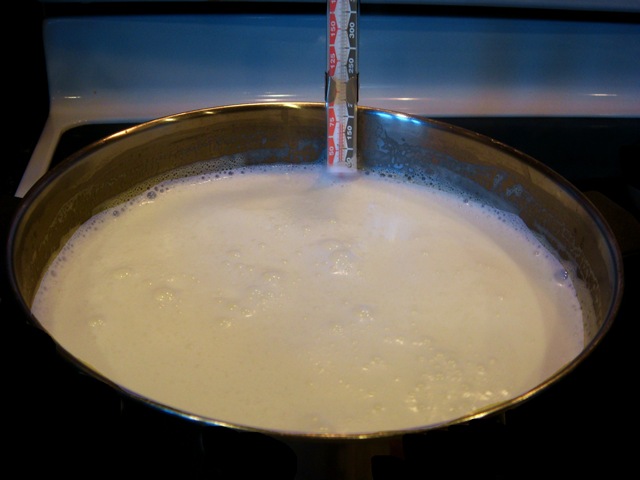
In a saucepot, stir together milk and dry milk powder. Powdered milk is an optional ingredient, but it does help make for a thicker yogurt. If you are using a thermometer, attach it to the side of the pan and bring milk to 185°F-200°F, stirring often. If you are not using a thermometer, bring milk just barely to a boil and then remove from heat immediately. If the milk has developed a foam on top, skim this off.

Fill a clean sink with about 2-3 inches of ice water (just make sure that the water level is low enough that when you add the pan of milk, it comes about halfway up pan). Set pan of hot milk into the ice water bath. Let milk cool to about 110°F (without a thermometer: baby-bottle warm), stirring often. This should take about 10 mins. If you leave your milk too long, and it gets too cool, just reheat slightly on the stove until it reaches 110°F.

040910 0431-1 Gently stir yogurt starter (just plain, unsweetened yogurt, preferably not non-fat) into milk. The first time you make your own yogurt, you will need to buy this. Try to get a high quality, plain yogurt with no pectin added (or other additives). For future batches of yogurt, save a small amount of your own yogurt to use as a starter the next time.

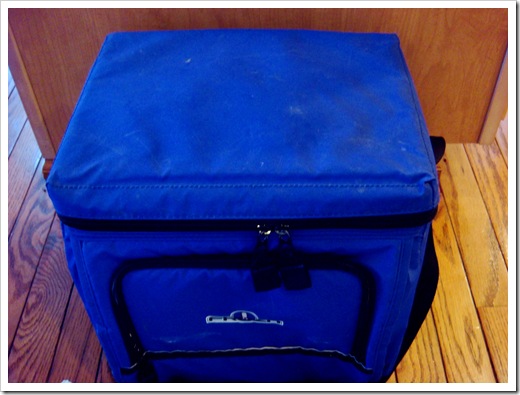
Yogurt needs to incubate between 98°F and 113°F. If the temperature is too low, the yogurt will not reproduce and you will have a runny final product. Temperatures over 118°F will kill the yogurt culture. An easy place to maintain this temperature range is in a cooler. I usually make 3 quarts of yogurt at a time (plus a little extra to use as starter the next time). This cooler fits my 3 quart-sized yogurt jars, one half-pint jar, plus 2 hot water jars for maintaining a nice warm good-bacteria growing temperature.

While the milk is cooling, I fill two quart-sized jars with boiling water and place them in a towel-lined cooler. Once I have mixed the milk with the yogurt starter, I put my yogurt-filled jars in the cooler with the hot water-filled jars.

040910 065-1 Not shown in the above photo is the small half-pint jar that I also fill and add to the cooler. It serves as the starter for the next batch of yogurt I make. You can also just save the last part of one of your quart jars, but this way, I don’t forget and eat the whole jar, and it stays sealed until I am ready to make more yogurt.

060610 018-1

Wrap the towel around the jars.

040910 066-1 Close the cooler and let the yogurt incubate for 8-12 hours. I like yogurt on the tart side, so I usually let it stay for a full 12 hours.
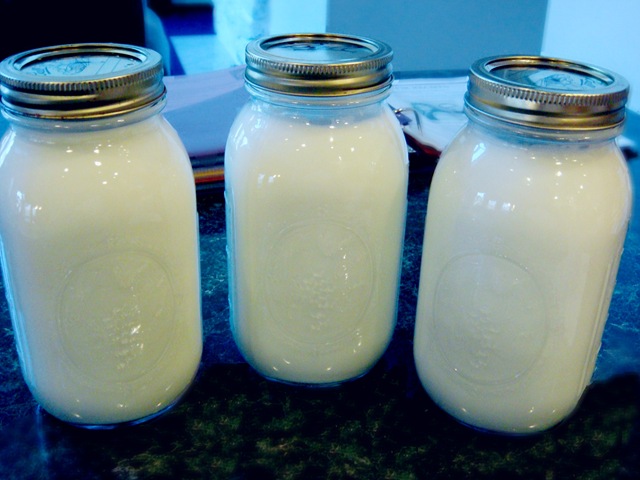
040910 068-1 Transfer jars to the refrigerator. Do not open or shake the jars until they have completely chilled in the refrigerator.

040910 061-1

Delicious, thick creamy yogurt!

060610 006-1

For an even better treat, top your homemade yogurt with some homemade granola!

060610 016-1

RECIPES:

Homemade Yogurt

040910 061-1

Equipment:
Canning jars and lids** (see note at bottom)
Small cooler
Bath towel
Candy/frying thermometer (optional)

Per quart jar of yogurt:
4 cups milk (whole milk is best)**
3 Tbs dry milk powder (optional, but it makes for a thicker yogurt)
2 Tbs plain yogurt

For 3 quarts of yogurt + one 1/2 pint jar (for starter)**:
3 quarts whole milk
1/2 cup (slightly heaping) dry milk powder
1/3 cup, heaping, (or 6 Tbs) plain yogurt

In a saucepot, stir together milk and dry milk powder. If you are using a thermometer, attach it to the side of the pan and bring milk to 185°F-200°F, stirring often. If you are not using a thermometer, bring milk just barely to a boil and then remove from heat immediately. If the milk has developed a foam on top, skim this off.

Fill a clean sink with about 2-3 inches of ice water (just make sure that the water level is low enough that when you add the pan of milk, it comes about halfway up pan). Set pan of hot milk into the ice water bath. Let milk cool to about 110°F (without a thermometer: baby-bottle warm), stirring often. This should take about 10 mins. If you leave your milk too long, and it gets too cool, just reheat slightly on the stove until it reaches 110°F.

While milk is cooling, boil some water (about 2 quarts if you are making 3 quarts of yogurt) and pour it into clean jars. Top with lids. Place in a towel-lined cooler. If you are making a lot of yogurt and using a large cooler, you can also just put a pan of just boiled water in the bottom of the towel-lined cooler.

Remove milk from cold water bath, and gently stir in yogurt. Pour into sterile glass jars.** Top with lids and screw top rings. Place jars of milk in the cooler with the hot water jars. Wrap towel around tops of jars and close cooler.

Let incubate for 8-12 hours. Do not open cooler during this time. You need to maintain a temperature between 98°F and 113°F. If the temperature is too low, the yogurt will not reproduce and you will have a runny final product. Temperatures over 118°F will kill the yogurt culture.

Remove yogurt jars from the cooler and place in the refrigerator to chill. Do not open jars or shake or stir yogurt until well chilled.

**NOTE: When I make yogurt, I like to make an additional jar (a small half-pint jar) to save as starter for the next batch. Using the full amount of milk given above will give you enough extra for this small jar. If you are not going to make an additional small jar, then reduce the milk by a few tablespoons per quart.

NoEmptyChairs.me

Homemade Granola

  • Servings: 20 1-cup servings
  • Print

060610 016-1

10 cups rolled oats
2 cups coarsely chopped raw almonds
2 cups coarsely chopped raw pecans
1 cup wheat germ
1 cup sunflower seeds
¼ cup flax seeds
¼ cup sesame seeds
2 tsp cinnamon (use more for a stronger flavor)
1 cup coconut oil
1 ½ cups honey (or half honey/half pure maple syrup)
1 Tbs vanilla extract
2-3 cups dried fruit: raisins, cranberries, blueberries, cherries (optional)
1 cup shredded/flaked coconut (unsweetened, if possible)(optional)

Preheat oven to 325°F.

In a large bowl, mix together oats, nuts, wheat germ, sunflower, flax and sesame seeds, and cinnamon.

Heat coconut oil until melted. Stir in honey and/or maple syrup and vanilla. Stir into oat mixture.

Pour onto a large baking dish. Bake at 325°F for 90 minutes, stirring every 15 minutes. Cook until granola is golden brown.

Cool.

Optional: stir in dried fruit. I like to store the granola without the fruit mixed in, and then add different kinds of dried fruit when I am serving the granola (saves on different kids picking out different kinds of fruit!).

Yield: This makes A LOT (more than 20 cups)! It can easily be halved, but it also stores really well in the freezer (in Ziploc bags). Freeze before adding dried fruit.

NoEmptyChairs.me

4 Comments

Filed under Breakfast/Brunch, Condiments/Sauces, Tips and Tutorials

Dulce de Leche

DSC02455.jpg

**Below are six different ways to make Dulce de Leche. Click on the “METHOD” titles to go to the individual blog posts for more detailed instructions and pictures**

Dulce de Leche

DSC02455.jpg

STOVETOP METHOD:

Ingredients:

  • unopened cans of sweetened condensed milk

Preparation:

  1. Start with a large stockpot. Place a rack in the bottom of the pot (mine has a steamer insert that I used).
  2. Remove the labels from your sweetened condensed milk. Place unopened, label-free cans  into the bottom of your stockpot. You can use as many as will fit in one layer in your pot.
  3. Fill pot with room temperature tap water. Cover cans completely with water. The water level should be at least 2 inches above the cans.
  4. Cover the pot and bring to a boil. Reduce heat to a simmer. Cook, covered, for 3 hours.
    ***The water level must remain above the top of the cans. If not—this is when you end up cleaning caramel from exploding cans off of the top of your ceiling and every surface beneath it*** To ensure that you don’t forget that you are cooking when you go off and start another project, set a timer for 30 minutes. Check water level (add more boiling water, if necessary), then set the timer again for another 30 minutes. Continue setting the timer in 30 minute increments until the 3 hours are up.
  5. Remove pan from heat, remove lid, and let water cool for 30-60 minutes before removing cans.
  6. Unopened cans can be stored on a pantry shelf (use a marker to label cans). Opened cans need to be refrigerated.

CROCKPOT METHOD:

Ingredients:

  • Unopened cans of sweetened condensed milk

Preparation:

  1. Remove labels from sweetened condensed milk cans. Do not open cans.
  2. Place cans in the bottom of a crock pot.
  3. Cover cans completely with room temperature water. **Be sure that water completely covers cans**
  4. Place the lid on the crock pot and cook on low heat for 8 hours. (The water level in my crock pot stayed the same for the entire cooking time, so there was no need to add additional water.)
  5. Turn off crock pot, remove lid and let water cool 30-60 minutes before removing cans.
  6. Unopened cans can be stored on a pantry shelf (use a marker to label cans). Opened cans need to be refrigerated.

OVEN METHOD:

Ingredients:

  • One can of sweetened condensed milk

Preparation:

  1. Preheat oven to 425°F.
  2. Pour one can of sweetened condensed milk into a glass pie plate. Cover the pie plate securely with foil.
  3. Place foil-covered pie plate in a larger baking pan. (I used the bottom half of a broiler pan.)
  4. Place the pans on an oven rack and add hot water until it reaches the halfway mark of the pie plate.
  5. Bake for 60-90 minutes, adding more water if necessary

DOUBLE BOILER METHOD:

Ingredients:

  • One can of sweetened condensed milk

Preparation:

  1. Pour one can of sweetened condensed milk into the top of a double boiler.
  2. Fill the bottom of the double boiler with water and bring to a boil.
  3. Cover pan and cook over low heat for 50-60 minutes (or longer to get desired consistency).
  4. Stir mixture occasionally, until thick and caramel-colored.

PRESSURE CANNER METHOD:

Ingredients:

  • Cans of sweetened condensed milk

Preparation:

  1. Wash canning jars (a quick run through the dishwasher is a good way to sanitize them). Place new canning lids in a small pan of very hot water (bring water to a boil, then remove from heat and add lids).
  2. Open sweetened condensed milk cans and pour into canning jars, leaving 1/2” headspace. (Try not to lick the remaining sweet milk off of the can lids now-you don’t want to incorporate any germs into the jars. There will be plenty of time for licking when the jars are processing.)
  3. Wipe rims and edges of jars with a damp cloth to remove any milk that dribbled.
  4. Place lids and rings on jars.
  5. Place filled jars on a rack in a pressure canner (YOU MUST USE A PRESSURE CANNER, NOT A BOILING BATH CANNER). Add 3 quarts of room temperature water. DO NOT BRING WATER TO A BOIL BEFORE ADDING JARS. Since you are not doing a “hot pack” (hot jars; hot filling; hot water), the jars WILL break if you place them directly into boiling water. Then you end up with a very large pot full of sticky, sugar milk/water. Leaving you to clean all of the other jars and the pot and start over. Not fun.
  6. Place the lid on the pressure canner and bring the water to a boil over high heat.
  7. After you have a steady steam flow through the vent pipe for 10 minutes, place the pressure regulator on the vent pipe.
  8. Continue to cook on high until pressure reaches 15 lb.
  9. Lower heat to maintain a constant 15 lb pressure. Keep an eye on the pressure gauge and adjust heat to maintain 15 lb of pressure. Cook for 20 minutes at 15 lb pressure. I used both pint and half-pint jars, and they both came out the same after 20 minutes.
  10. Turn off stove and remove pressure canner from heat. DO NOT OPEN. Let the pressure drop until the air vent/cover lock has completely dropped and no steam escapes when the pressure regulator is tilted (this took about 30 minutes for mine).
  11. When pressure is completely reduced, remove pressure regulator and open canner. Remove jars and set on the countertop on a clean towel.
  12. Let sit for 24 hours. Check seal. Refrigerate for added food safety.

HOMEMADE METHOD
(Adapted from Alton Brown):

Ingredients:

  • 4 cups (1 quart) whole milk
  • 1 ½ cups granulated sugar
  • ½ tsp baking soda
  • 1 vanilla bean, split

Preparation:

  1. Combine the milk and sugar in a heavy saucepan.
  2. Bring to a boil over medium heat. Do not stir.
  3. Remove from heat and use a skimmer to remove foam (a spoon or small ladle will work if you don’t have a skimmer).
  4. Add baking soda and split (but not scraped) vanilla bean to the pan.
  5. Cook, uncovered, over low heat for one hour, stirring often and skimming foam as necessary.
  6. Remove vanilla bean and continue to cook, stirring constantly, until mixture reaches desired thickness.  This will take about 60 minutes, depending on how thick you want your caramel. It will burn easily at this point, so be attentive!
  7. The dulce de leche is close to done when a spoon dragged through the mixture leaves a trail. It will thicken a lot as it cools. Test for consistency by dropping a small spoonful into a cup of ice water, or by placing a few drops on a plate that has been placed in the freezer.
  8. The original recipe calls for straining through a fine mesh strainer, but I skipped this step and it was still nice and smooth.

NoEmptyChairs.me

Leave a comment

Filed under Candy, Desserts, Tips and Tutorials

How to … Roast Peppers

DSC03063

Lay whole peppers on a foil-lined baking sheet. Brush with olive oil. Broil about 2″ from heating element for 5-10 minutes. Check often! Turn peppers over to blacken both sides.

If you have a gas stove, peppers can also be roasted over a gas flame. Use tongs or a metal skewer to hold pepper directly over the flame.

A third way to roast peppers is on a charcoal or gas grill. Place peppers directly on grate, and turn when blackened. Watch carefully.

DSC03064

Place hot peppers into a brown paper bag. Let cool slightly. Shake bag.

DSC03070

Peel blackened skins from peppers. Discard seeds, if desired.

NoEmptyChairs.me

Leave a comment

Filed under Tips and Tutorials