Category Archives: Condiments/Sauces

Homemade Yogurt & Granola

040910 061-1 Within about the last year and a half, I have become quite the fermented milk fan! From kefir to yogurt to lacto-fermented mayonnaise, there is always some kind of milk product sitting out on my counter, working it’s probiotic, yeast-culturing magic; turning plain old milk into something so much more healthy and delicious.

Some of my children find this disgusting, and refuse to touch anything in the fridge that is kept in a Mason Jar. Others have jumped right in and love to drink our daily kefir smoothies, or eat “stirring yogurt” (Little J’s name for homemade yogurt-because you get to “stir-in” whatever flavor or additives you want-like the granola recipe at the bottom of the page). Kefir is my sour-milk of choice, but a nice thick yogurt is always great to have around as well. I will show you some of my kefir-growing soon, but if you are new to kefir check out this great website.

Another great thing about homemade yogurt, besides the superior taste and nutritional value, is how cheap it is to make. For just about the cost of milk (especially after your first batch when you now have your own yogurt starter to use for the next batch), you can also have yogurt. We have been getting our milk from a local dairy, so I also love being able to turn good, fresh milk into creamy, delicious, no-preservative-or-other-additives yogurt.

Making Yogurt

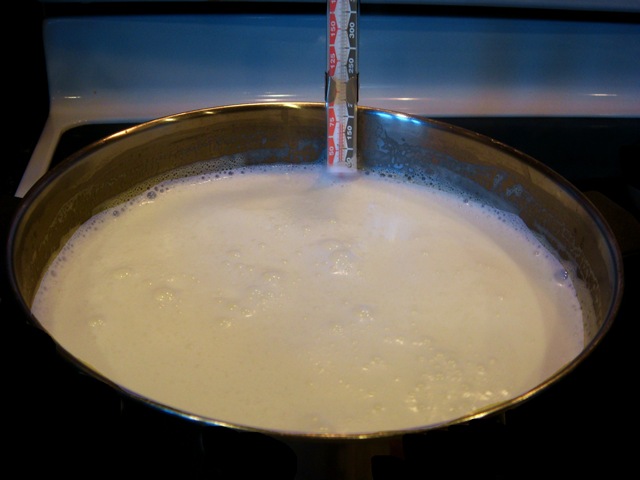
In a saucepot, stir together milk and dry milk powder. Powdered milk is an optional ingredient, but it does help make for a thicker yogurt. If you are using a thermometer, attach it to the side of the pan and bring milk to 185°F-200°F, stirring often. If you are not using a thermometer, bring milk just barely to a boil and then remove from heat immediately. If the milk has developed a foam on top, skim this off.

Fill a clean sink with about 2-3 inches of ice water (just make sure that the water level is low enough that when you add the pan of milk, it comes about halfway up pan). Set pan of hot milk into the ice water bath. Let milk cool to about 110°F (without a thermometer: baby-bottle warm), stirring often. This should take about 10 mins. If you leave your milk too long, and it gets too cool, just reheat slightly on the stove until it reaches 110°F.
040910 0431-1 Gently stir yogurt starter (just plain, unsweetened yogurt, preferably not non-fat) into milk. The first time you make your own yogurt, you will need to buy this. Try to get a high quality, plain yogurt with no pectin added (or other additives). For future batches of yogurt, save a small amount of your own yogurt to use as a starter the next time.

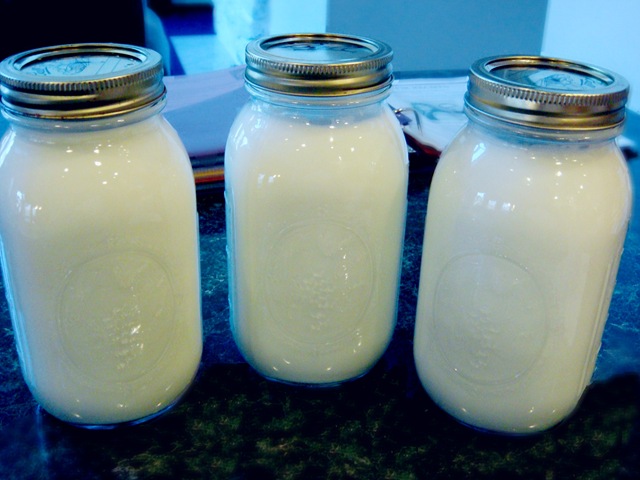
Yogurt needs to incubate between 98°F and 113°F. If the temperature is too low, the yogurt will not reproduce and you will have a runny final product. Temperatures over 118°F will kill the yogurt culture. An easy place to maintain this temperature range is in a cooler. I usually make 3 quarts of yogurt at a time (plus a little extra to use as starter the next time). This cooler fits my 3 quart-sized yogurt jars, one half-pint jar, plus 2 hot water jars for maintaining a nice warm good-bacteria growing temperature.

While the milk is cooling, I fill two quart-sized jars with boiling water and place them in a towel-lined cooler. Once I have mixed the milk with the yogurt starter, I put my yogurt-filled jars in the cooler with the hot water-filled jars.

040910 065-1 Not shown in the above photo is the small half-pint jar that I also fill and add to the cooler. It serves as the starter for the next batch of yogurt I make. You can also just save the last part of one of your quart jars, but this way, I don’t forget and eat the whole jar, and it stays sealed until I am ready to make more yogurt.

060610 018-1

Wrap the towel around the jars.

040910 066-1 Close the cooler and let the yogurt incubate for 8-12 hours. I like yogurt on the tart side, so I usually let it stay for a full 12 hours.

040910 068-1 Transfer jars to the refrigerator. Do not open or shake the jars until they have completely chilled in the refrigerator.

040910 061-1

Delicious, thick creamy yogurt!

060610 006-1

For an even better treat, top your homemade yogurt with some homemade granola!

060610 016-1

RECIPES:

Homemade Yogurt

040910 061-1

Equipment:
Canning jars and lids** (see note at bottom)
Small cooler
Bath towel
Candy/frying thermometer (optional)

Per quart jar of yogurt:
4 cups milk (whole milk is best)**
3 Tbs dry milk powder (optional, but it makes for a thicker yogurt)
2 Tbs plain yogurt

For 3 quarts of yogurt + one 1/2 pint jar (for starter)**:
3 quarts whole milk
1/2 cup (slightly heaping) dry milk powder
1/3 cup, heaping, (or 6 Tbs) plain yogurt

In a saucepot, stir together milk and dry milk powder. If you are using a thermometer, attach it to the side of the pan and bring milk to 185°F-200°F, stirring often. If you are not using a thermometer, bring milk just barely to a boil and then remove from heat immediately. If the milk has developed a foam on top, skim this off.

Fill a clean sink with about 2-3 inches of ice water (just make sure that the water level is low enough that when you add the pan of milk, it comes about halfway up pan). Set pan of hot milk into the ice water bath. Let milk cool to about 110°F (without a thermometer: baby-bottle warm), stirring often. This should take about 10 mins. If you leave your milk too long, and it gets too cool, just reheat slightly on the stove until it reaches 110°F.

While milk is cooling, boil some water (about 2 quarts if you are making 3 quarts of yogurt) and pour it into clean jars. Top with lids. Place in a towel-lined cooler. If you are making a lot of yogurt and using a large cooler, you can also just put a pan of just boiled water in the bottom of the towel-lined cooler.

Remove milk from cold water bath, and gently stir in yogurt. Pour into sterile glass jars.** Top with lids and screw top rings. Place jars of milk in the cooler with the hot water jars. Wrap towel around tops of jars and close cooler.

Let incubate for 8-12 hours. Do not open cooler during this time. You need to maintain a temperature between 98°F and 113°F. If the temperature is too low, the yogurt will not reproduce and you will have a runny final product. Temperatures over 118°F will kill the yogurt culture.

Remove yogurt jars from the cooler and place in the refrigerator to chill. Do not open jars or shake or stir yogurt until well chilled.

**NOTE: When I make yogurt, I like to make an additional jar (a small half-pint jar) to save as starter for the next batch. Using the full amount of milk given above will give you enough extra for this small jar. If you are not going to make an additional small jar, then reduce the milk by a few tablespoons per quart.

NoEmptyChairs.me

Homemade Granola

  • Servings: 20 1-cup servings
  • Print

060610 016-1

10 cups rolled oats
2 cups coarsely chopped raw almonds
2 cups coarsely chopped raw pecans
1 cup wheat germ
1 cup sunflower seeds
¼ cup flax seeds
¼ cup sesame seeds
2 tsp cinnamon (use more for a stronger flavor)
1 cup coconut oil
1 ½ cups honey (or half honey/half pure maple syrup)
1 Tbs vanilla extract
2-3 cups dried fruit: raisins, cranberries, blueberries, cherries (optional)
1 cup shredded/flaked coconut (unsweetened, if possible)(optional)

Preheat oven to 325°F.

In a large bowl, mix together oats, nuts, wheat germ, sunflower, flax and sesame seeds, and cinnamon.

Heat coconut oil until melted. Stir in honey and/or maple syrup and vanilla. Stir into oat mixture.

Pour onto a large baking dish. Bake at 325°F for 90 minutes, stirring every 15 minutes. Cook until granola is golden brown.

Cool.

Optional: stir in dried fruit. I like to store the granola without the fruit mixed in, and then add different kinds of dried fruit when I am serving the granola (saves on different kids picking out different kinds of fruit!).

Yield: This makes A LOT (more than 20 cups)! It can easily be halved, but it also stores really well in the freezer (in Ziploc bags). Freeze before adding dried fruit.

NoEmptyChairs.me
4 Comments

Filed under Breakfast/Brunch, Condiments/Sauces, Tips and Tutorials

Simple Sunday Supper: Roast Beef and Gravy

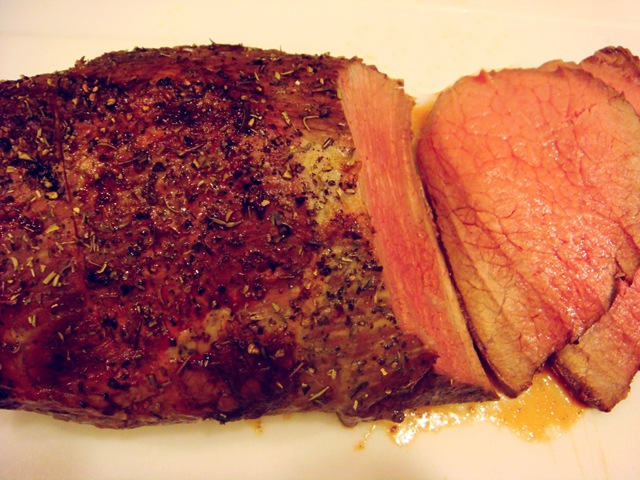
021910 032-1 Just a quick post for an easy to make traditional Sunday meal: roast beef and gravy.

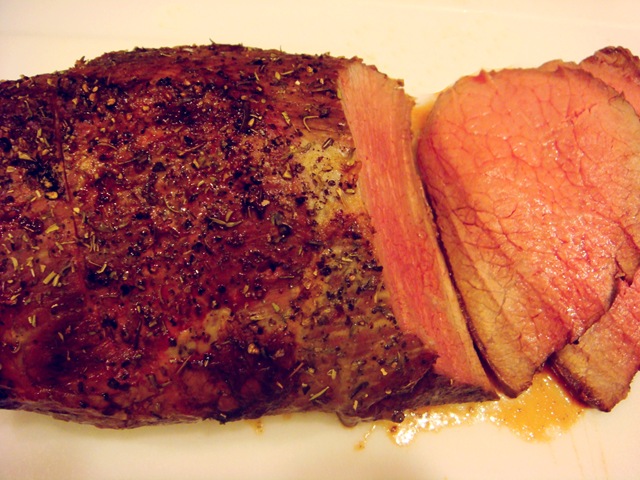
This roast uses an eye-of-round cut, and should be served medium-rare to medium. It will not be nearly as tender if it is overcooked.

I do not use a thermometer to make this, but as all ovens are a little bit different, you could you a probe thermometer to make sure that your roast is cooked to your liking.

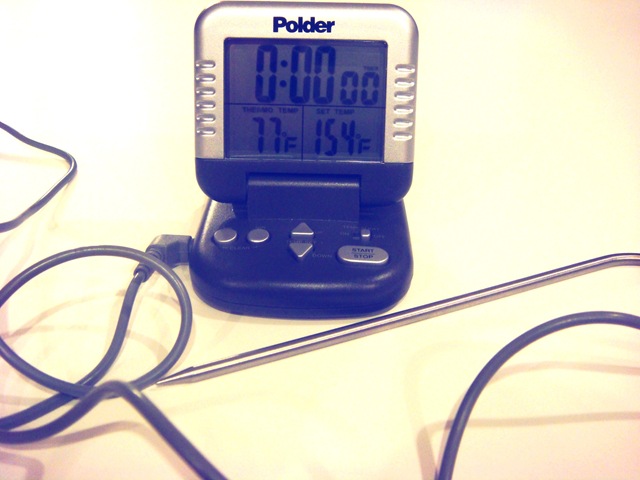
0401010 127-1 This is a probe thermometer. The temperature probe stays in the meat the entire time in the oven, while the temperature gauge stays on your countertop. You can also set an alarm to sound when your roast hits a certain temperature. When you are making this roast, you DO NOT want to open the oven.

This roast starts at a very high heat: 500°F, and after an initial sear in the hot oven, it slow roasts in a cooling oven for another 2 ½ hours.

DSC03551-1

Use whatever seasonings you like: this has salt, pepper, garlic, spicy paprika, rosemary and bay leaves. Simply place your roast on a rack in a roasting pan and sprinkle with seasonings.

RECIPE:

Roast Beef

  • Servings: 8-10, depending on size of roast
  • Print

021910 032-1

3 lb eye-of-round roast (adjust cooking time for other sized roasts)
Seasonings: (salt, pepper, garlic powder, smoked paprika, Italian seasoning, rosemary sprig, bay leaf)

Preheat oven to 500°F.

Season the roast with desired seasonings. Place on a rack in a roasting pan. Do not cover or add water.

Place the roast in the preheated oven. Reduce temperature to 475°F. Roast for 20 minutes (or about 7 minutes per pound).

Turn off the oven and let the roast sit in the hot oven for 2 ½ hours for medium rare. Do not open the door.

Carve into thin slices to serve. Serve with mashed potatoes and Beef Gravy.

Beef Gravy

¼ cup butter
3 Tbs flour (white or fine ground whole wheat)
3 cups beef broth
1 tsp Kitchen Bouquet or Gravy Master
dash white pepper
(Pan Drippings from a roast beef)**

If you are preparing gravy for a roast beef, remove roast from pan and set on a grooved carving/cutting board.

If your roasting pan can be used on the stovetop, drain any liquid in the roasting pan into a small bowl (do not throw away). Add butter to the roasting pan and turn stove onto medium heat. If your pan cannot be used on the stovetop, scrape liquid and browned bits from pan into a small bowl, then melt butter in a skillet.

Stir melted butter until browned bits are removed from bottom of pan. Stir in flour and cook 4-5 minutes, whisking constantly, until roux is a deep brown color. Stir in beef broth while whisking constantly. Stir in Kitchen Bouquet, pepper, and reserved pan drippings. Bring to a boil. Simmer 5-10 minutes, or until ready to serve. Taste; add salt if necessary.

**As you carve your roast, add any drippings from roast to the gravy before serving.

NoEmptyChairs.me

Leave a comment

Filed under Condiments/Sauces, Main Dishes

Dulce de Leche (Six Ways) PART THREE

DSC02455

Here we are at the last installment of making your own Dulce de Leche. You should definitely be feeling the sugar-rush effects now. Today we move into slightly more involved ways of making Dulce de Leche. Try PART ONE and PART TWO for some easier preparations. These last two methods take a little bit more effort, but are well worth it (every now and again, at least). They also involve a few “special equipment” items.

Neither of today’s methods involve unopened cans or water baths, so all is safe. Kind of. Unless you count the possibility of botulism. But we will get into that in a minute. Scroll to the bottom for my final recommendations.

Today we are looking at making dulce de leche:

  • in jars in a PRESSURE CANNER
  • HOMEMADE

.

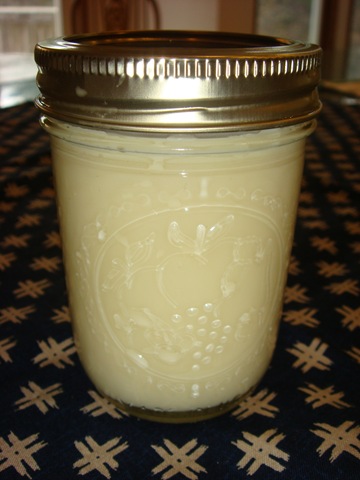
PRESSURE CANNER

(from a can but sealed in jars)

DSC03704.JPG-2

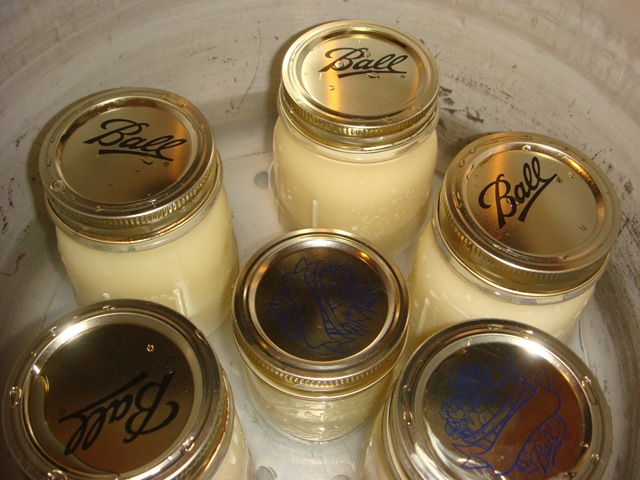
In trying this method, I was hoping for the same taste as the boiled unopened cans. But the cans do not come out of a boiling water bath looking very attractive. So how to present these as attractive gifts? Pressure canning is what I came up with. This is another method with a big DISCLAIMER. The USDA does NOT recommend canning milk products. I did find several sites giving instructions (not USDA approved) for canning regular milk and cheese. Granted, most of these were homesteading sites. So I am throwing caution to the wind and trying it. I figure that on my side in the not-ending-up-with-botulism argument are the following points:

  • I am starting with an already canned milk product, not fresh milk.
  • There is so much sugar in sweetened condensed milk that it would take a lot to make it spoil.
  • I have canned meat successfully, and it is approved by the USDA if using a pressure canner.
  • Butter can be canned, and it is a milk product.

These are my justifications for making this and letting the jars sit on a shelf in my basement. As part of this ongoing experiment, I will force myself to open a jar of this dulce de leche every month or so to make sure they are still edible. But my official recommendation to you is to refrigerate these jars after canning them. Then there is no possible food-safety issue.

Also, please refer to the instruction manual for your specific pressure canner before attempting this recipe. I am including the basic instructions for using mine. DO NOT USE A BOILING BATH CANNER. THAT WILL DEFINITELY EARN YOU A CASE OF FOOD POISONING.

  1. Wash canning jars (a quick run through the dishwasher is a good way to sanitize them). Place new canning lids in a small pan of very hot water (bring water to a boil, then remove from heat and add lids).
  2. ODSC03600pen sweetened condensed milk cans and pour into canning jars, leaving 1/2” headspace. (Try not to lick the remaining sweet milk off of the can lids now-you don’t want to incorporate any germs into the jars. There will be plenty of time for licking when the jars are processing.)
  3. Wipe rims and edges of jars with a damp cloth to remove any milk that dribbled.
  4. Place lids and rings on jars.
  5. DSC03602Place filled jars on a rack in a pressure canner. Add 3 quarts of room temperature water. DO NOT BRING WATER TO A BOIL BEFORE ADDING JARS. Since you are not doing a “hot pack” (hot jars; hot filling; hot water), DSC03585the jars WILL break if you place them directly into boiling water. Then you end up with a very large pot full of sticky, sugar milk/water. Leaving you to clean all of the other jars and the pot and start over. Not fun.
  6. Place the lid on the pressure canner and bring the water to a boil over high heat.
  7. DSC03606After you have a steady steam flow through the vent pipe for 10 minutes, place the pressure regulator on the vent pipe.
  8. Continue to cook on high until pressure reaches 15 lb.
  9. Lower heat to maintain a constant 15 lb pressure. Keep an eye on the pressure gauge and adjust heat to maintain 15 lb of pressure. Cook for 20 minutes at 15 lb pressure. I used both pint and half-pint jars, and they both came out the same after 20 minutes.
  10. Turn off stove and remove pressure canner from heat. DO NOT OPEN. Let the pressure drop until the air vent/cover lock has completely dropped and no steam escapes when the pressure regulator is tilted (this took about 30 minutes for mine).
  11. DSC03611 When pressure is completely reduced, remove pressure regulator and open canner. Remove jars and set on the countertop on a clean towel.
  12. Let sit for 24 hours. Check seal. Refrigerate for added food safety.

.

.

.

.

HOMEMADE

(no cans here)

DSC03684

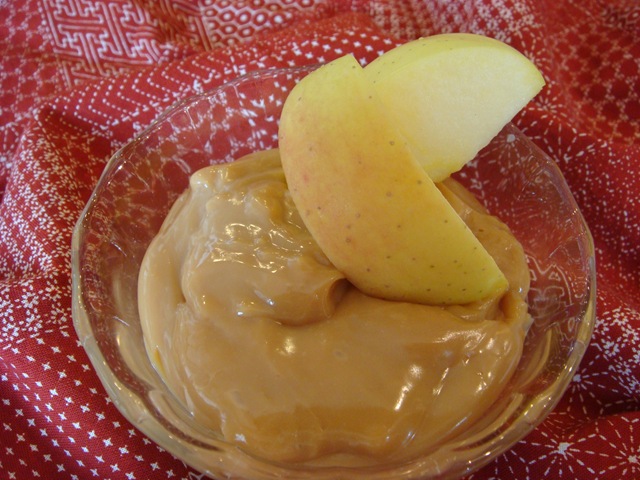
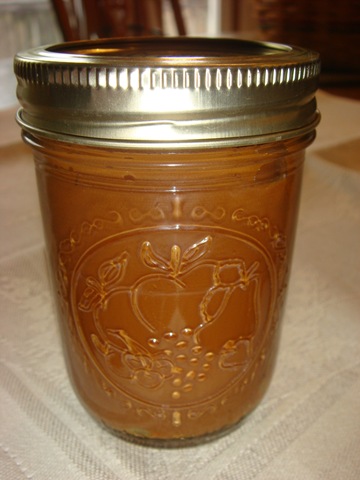
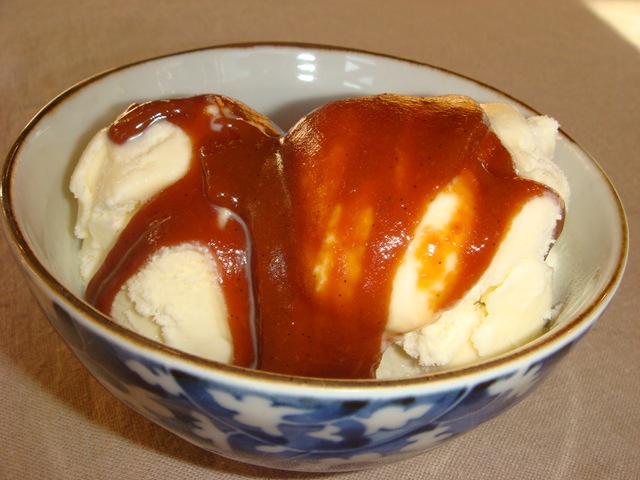
This is the first “recipe” for dulce de leche that I’ve made with actual ingredients. This is adapted from a recipe from Alton Brown. It is a lot more time consuming than any of the other methods, but is it ever worth it! This was truly decadent! Don’t you just love the vanilla bean flecks? As the other methods produced a caramel that was more of a dipping or spreading consistency, I wanted this one to be one that I could pour. DSC03755 On ice cream, for example. The only tricky part of this recipe is knowing when to remove the dulce de leche from the heat. Leave it too long and you end up with caramels suitable for cutting (not all bad either) and more susceptible to turning “sugary”. Don’t cook it long enough and you end up with a brown-colored-sweet-milky syrup. Not really dulce de leche.

The only two drawbacks to this method are the time involved (lots of standing at the stove stirring the pot), and the fact that you can only make one batch at a time, which will need to be refrigerated.

Ingredients:

  • 4 cups (1 quart) whole milk (don’t skimp here!)
  • 1 ½ cups granulated sugar
  • ½ tsp baking soda
  • 1 vanilla bean, split

Preparation:

  1. Combine the milk and sugar in a heavy saucepan.
  2. Bring to a boil over medium heat. Do not stir.
  3. DSC02526 Remove from heat and use a skimmer to remove foam (a spoon or small ladle will work if you don’t have a skimmer).
  4. Add baking soda and split (but not scraped) vanilla bean to the pan.
  5. DSC02532Cook, uncovered, over low heat for one hour, stirring often and skimming foam as necessary.
  6. Remove vanilla bean and continue to cook, stirring constantly, until mixture reaches desired thickness.  This will take about 60 minutes, depending on how thick you want your caramel. It will burn easily at this point, so be attentive!
  7. DSC03652 The dulce de leche is close to done when a spoon dragged through the mixture leaves a trail. It will thicken a lot as it cools. Test for consistency by dropping a small spoonful into a cup of ice water, or by placing a few drops on a plate that has been placed in the freezer.
  8. The original recipe calls for straining through a fine mesh strainer, but I skipped this step and it was still nice and smooth.

DSC03755

Concluding Thoughts:

While this was a fun experiment, it is not recommended for your waistline. Thank goodness I had a recovering swine flu victim (who was down 15 pounds) that I could push this onto to “test” for me. He is back up to normal weight now. You’re welcome, Brian!

My recommendations:

The homemade dulce de leche was definitely superior to the ones made with sweetened condensed milk. But I am likely to only make this on special occasions, when I plan on eating it directly on top of something where the flavor will really shine (and not incorporated into a recipe-that would be a huge waste). It is pretty time consuming, as it needs to be watched (and sometimes stirred) throughout the entire process.

The pressure canner method is a great way to prepare dulce de leche that you plan on giving to friends. Great flavor.

I didn’t care for the oven method at all (no more oven water baths for me), and was only slightly more impressed with the double boiler method. But I may have to give that one another chance.

Practically, the stovetop and crock pot varieties were easiest to make and the best tasting (non-homemade) varieties. They were easy to prepare, and I love that you can do a bunch of cans at one time, and then have them available to grab out of your pantry any time.

The crock pot version gets my overall best pick. That will be my go-to dulce de leche from now on. But the homemade version wins hands down on flavor. So it will definitely have a place in my recipe files.


5 Comments

Filed under Condiments/Sauces, Desserts

Dulce de Leche (Six Ways) PART TWO

Copy of DSC02455

Yesterday we began the journey into dulce de leche and the many ways to prepare it at home. PART ONE included the first two methods that I tried (cooking an unopened can on the STOVETOP and in a CROCK POT), and I had no exploding cans and delicious dulce de leche!

The next two methods that I tried were much less risky, but as is almost always the case in that risk/reward relationship, I didn’t like these two nearly as well. They both involved more work for what I thought was an inferior result. But maybe you will have better success.

On the menu today are dulce de leche made in the:

  • OVEN
  • DOUBLE BOILER

.

OVEN

(from a can, but not still in the can)

DSC02418

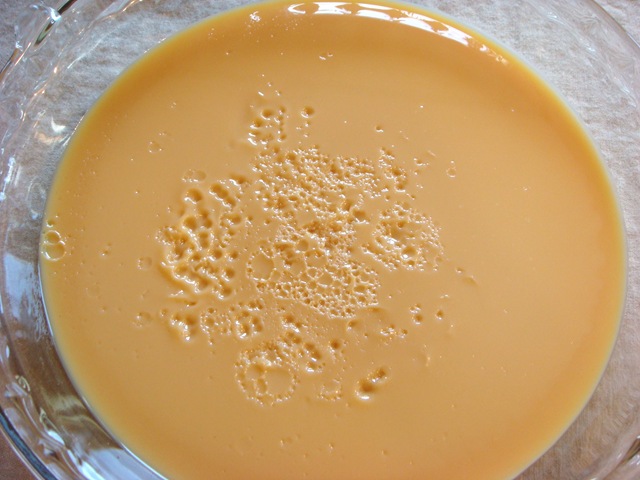
This was my least favorite of all of the dulce de leche that I made. It involves a water bath, and for some reason, I am severely water-bath-challenged. My foil-wrapped cheesecakes cooked in a water bath always end up a soggy mess. So I go to great lengths to avoid sloshing boiling water around in my oven. But for the sake of science, I put on my big girl pants and faced my fear. Once. Not again.

The instructions for making this are fairly simple. First I will include what you should do. Then I will share, by sad experience, what you should never do.

    1. Copy of DSC02392 Preheat oven to 425°F.
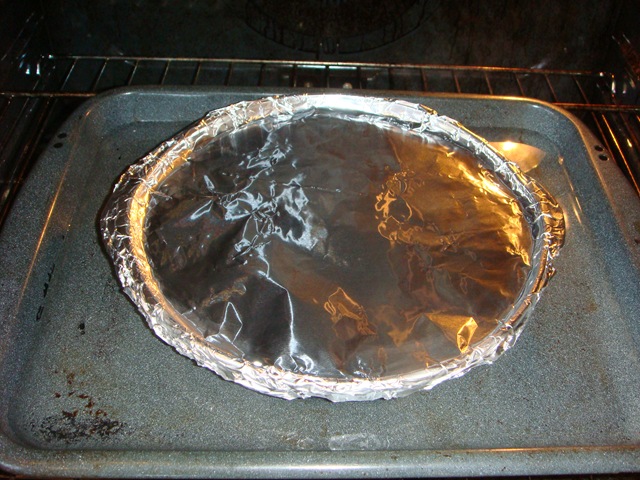
    1. Pour one can of sweetened condensed milk into a glass pie plate. Cover the pie plate securely with foil.
    2. Place foil-covered pie plate in a larger baking pan. (I used the bottom half of a broiler pan.)
    3. DSC02400Place the pans on an oven rack and add hot water until it reaches the halfway mark of the pie plate.
    4. Bake for 60-90 minutes, adding more water if necessary

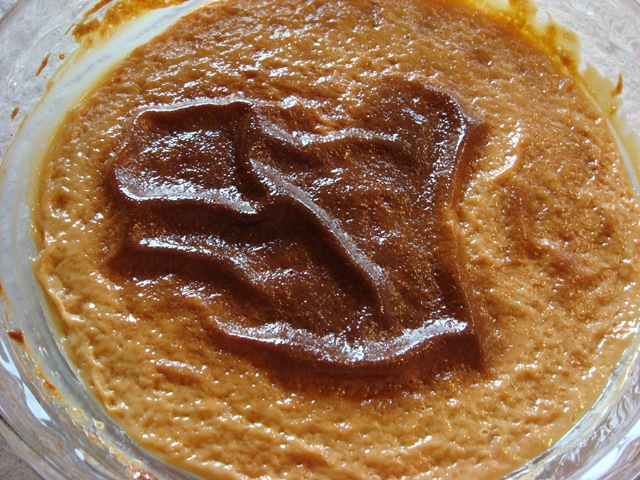
It all seems simple enough, right? Up to that point everything was great. Then I tasted it. It didn’t taste bad, it just still tasted like a can of sweetened condensed milk. Now, don’t get me wrong-I’ve licked my share of Eagle Brand lids (don’t even pretend that you’ve never done it). But it wasn’t rich, decadent, creamy caramel. So I put the foil back on (not a fun adventure) and cooked it for another 30 minutes (2 hours total now). Still not what I was hoping for. So now for the don’t list:

  • DON’T take a broiler pan with boiling hot water out of the oven. It will slosh. All over. Let it cool in the oven before removing.
  • DSC02459When your caramel isn’t dark enough, DON’T remove the foil and put it back in the oven. Bad plan.
  • However, once you have burned the top of your dulce de leche, DO pick off the burnt pieces and eat it anyway.

DSC02461 .

DOUBLE BOILER

(from a can, but not still in the can)

DSC02445

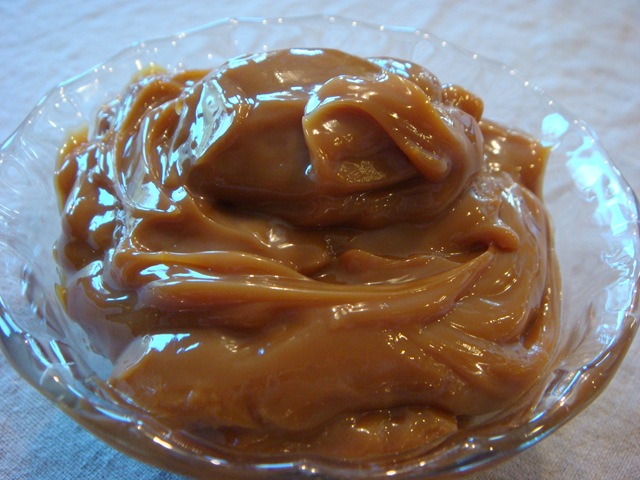
This method went much better for me than the oven method, but I still wasn’t thrilled with the taste of the final product. I cooked it twice as long as recommended, and it still had a very milky taste.

  1. DSC02375 Pour one can of sweetened condensed milk into the top of a double boiler.
  2. Fill the bottom of the double boiler with water and bring to a boil.
  3. DSC02438 Cover pan and cook over low heat for 50-60 minutes (I cooked it for 100 minutes to get this consistency).
  4. Stir mixture occasionally, until thick and caramel-colored.

.

.

.

Both of these methods produced an edible dulce de leche, but it just wasn’t the same quality as that made from pressure-induced caramelization (not sure that’s a real word?). The milk taste was still very evident in the end product. But if you don’t want to risk exploding cans, these are the methods for you. For me, I’ll take my chances!

Tomorrow- my last two experiments with Dulce de Leche, and two of my very favorites!


Leave a comment

Filed under Condiments/Sauces, Desserts

Dulce de Leche (Six Ways) PART ONE

DSC02455

So what do you do when swine flu rages in your house for SIX WEEKS,  often leaving you housebound with feverish, coughing demanding children (and one spouse), eventually leading to bronchitis and pneumonia?  I mean besides trying to hide Tylenol in Gatorade for the medicine-hating little people in the house.

What else – experiment with Dulce de Leche!

With hours of time on my hands, it seemed like the perfect opportunity to play with milk, sugar, vanilla beans and lots and lots of sweetened condensed milk.  Eagle Brand sweet milk was on sale 2/$3, so I stocked up! I will admit to some embarrassment explaining to the check-out girl why I had 20 cans of sweet milk in my cart. Can’t people just mind their own business in the grocery store?

The following post is not for the faint of heart, or risk-adverse home chef. We are talking about risking exploding cans, shattered jars, and possibly a little botulism thrown in for good measure. Not to mention the risk of covering your kitchen in oozing-sticky-wonderful-caramel heaven! Or the temptation to sit and eat this stuff straight out the can.

Dulce de Leche (pronounced Dool-say De Lechay) is a caramelized milk that originated in Latin America. Nestle sells it premade in a can, often found in the ethnic section of the grocery store (by the Latin foods). But, as I have found, it is very easy and much cheaper to make at home. I will show you how to make it SIX different ways, so there is something here for everyone, even those who are not willing to risk exploding cans. And for the true gourmet, who wouldn’t dream of starting with a can, there is even a homemade option (which really is to die for).

In short the six ways that I tried are:

  • STOVETOP (in the can)
  • CROCKPOT (in the can)
  • OVEN (from a can, but not still in the can)
  • DOUBLE BOILER (from a can, but not still in the can)
  • PRESSURE CANNER (from a can, but in a jar)
  • HOMEMADE (no cans here)

DSC02403

This is “the can”. Who knew that such an innocuous looking can could have the potential for such greatness!

So, on to the results. You might want to get up and make yourself a snack first; this is an exhaustive study of the process of turning milk and sugar into one of the most wonderful creations ever! Today I will share the first two (danger of exploding cans) methods. Besides the taste, what I love about these two methods is that you can make a lot at one time. And then the cans are shelf stable. They sit waiting, patiently, for when you need a can for that perfect recipe (and you don’t have a few hours to whip up fresh dulce de leche) or when the apple on your lunch plate is just calling out for something to dip itself in.

Stay tuned later this week for methods three – six.

.

.

STOVETOP (in the can)

DSC01756

This method is easy, but is only for those who like to flirt with danger. It is actually only dangerous if you forget to check on your water levels, but I will give my disclaimer now that Borden (the company that makes Eagle Brand sweetened condensed milk) does NOT recommend this method for making Dulce de Leche. Since they don’t recommend it, I don’t either (but I will still make it!)

  1. Start with a large stockpot. Place a rack in the bottom of the pot (mine has a steamer insert that I used). Many websites that give this method do not use a rack in the pot. The first time I made it without a rack, and the caramel in the bottom of my cans ended up slightly on the burned side. I did use a terrible thin pot, so if you have a nice thick one, this might not be a problem for you. But the second time around, I used a rack and the caramel cooked evenly through the can. The rack also kept the cans from making terrible noise as the water came to a boil.
  2. DSC01777Remove the labels from your sweetened condensed milk. Place unopened, label-free cans  into the bottom of your stockpot. You can use as many as will fit in one layer in your pot.
  3. Fill pot with room temperature tap water. Cover cans completely with water. The water level should be at least 2 inches above the cans.
  4. Cover the pot and bring to a boil. Reduce heat to a simmer. Cook, covered, for 3 hours.
    ***The water level must remain above the top of the cans. If not—this is when you end up cleaning caramel from exploding cans off of the top of your ceiling and every surface beneath it*** To ensure that you don’t forget that you are cooking when you go off and start another project, set a timer for 30 minutes. Check water level (add more boiling water, if necessary), then set the timer again for another 30 minutes. Continue setting the timer in 30 minute increments until the 3 hours are up.
  5. Remove pan from heat, remove lid, and let water cool for 30-60 minutes before removing cans.
  6. DSC01751.jpgUnopened cans can be stored on a pantry shelf (use a marker to label cans). Opened cans need to be refrigerated.

.

.

.

.

.

.

CROCKPOT (in the can)

DSC02496

As this is another “cooked in an unopened can” method, I will refer you to the disclaimer above. . .  Now that I have not recommended that you use this method, let me tell you how much I loved this! It was easy. easy. easy. And delicious!

  1. Remove labels from sweetened condensed milk cans. Do not open cans.
  2. Place cans in the bottom of a crock pot.
  3. Cover cans completely with room temperature water. **Be sure that water completely covers cans**
  4. Place the lid on the crock pot and cook on low heat for 8 hours. (The water level in my crock pot stayed the same for the entire cooking time, so there was no need to add additional water.)
  5. Turn off crock pot, remove lid and let water cool 30-60 minutes before removing cans.DSC02492
  6. Unopened cans can be stored on a pantry shelf (use a marker to label cans). Opened cans need to be refrigerated.

..

.

.

DSC02503

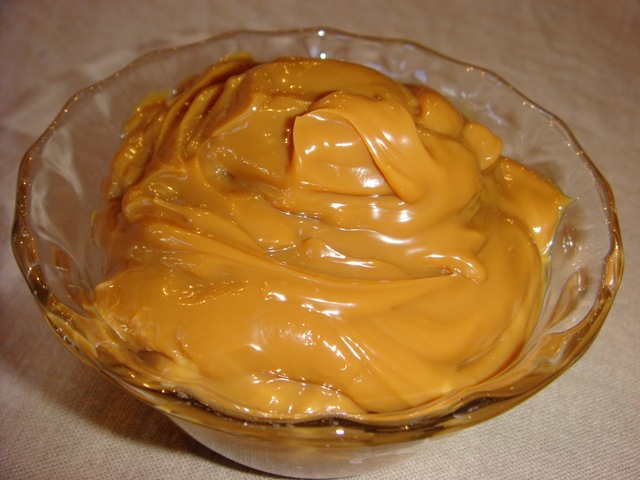
Both of these methods produced a dulce de leche that was delicious! It was thick and rich and a wonderful caramel color. Of the two, cooking it in the crock pot was the easier method.  Even though it takes a little longer, it was easier than worrying about maintaining water levels. If you do choose to try one of these methods, just remember to keep cans completely covered with water and let the cooking water cool slightly before removing cans. This will help to reduce “temperature shocks” which could cause the cans to burst.

NoEmptyChairs.me
 

3 Comments

Filed under Canning/Freezing, Condiments/Sauces, Desserts

Low-Sugar Peach Butter

DSC02211

uthcjam2009I know that summer is long gone and buying good, fresh peaches is no longer an option for most of us. But I wanted to submit this recipe to Aimée’s  (Under the High Chair) Virtual Jam Swap. What a fun way to showcase fresh fruit from around the country (world?) and how to preserve them in one of my favorite forms: homemade jam!

I like Apple Butter, but Peach Butter is my all-time favorite. It has some of the same flavors as the apple butter, but is so much richer and has a full body that apple butter just can’t touch! I make most of my jams with a reduced amount of sugar, using  Stevia (a naturally sweet herb) to provide most of the sweetness. I have not been successful, however, canning with only Stevia and no sugar. The jam seems to need at least some sugar to help it gel properly and to provide some of the “sheen” that makes jam look so good. So I use a substantially reduced amount of sugar and a little Stevia (a little goes a LONG way).

Peach/Apple Butter are great, but much more time consuming than regular jam. With five kids running around making constant demands, I am not very good at stirring and watching a pot closely for hours at a time. So I make this jam in the crockpot. It takes a good long time – at least 12 hours, sometimes 24, depending on your crock-pot and how humid your house is. But if I only need to stir it every hour or two, that I can handle.

DSC01559I use a large crock-pot, about 6 quarts to make this jam. I end up getting between 7 and 9 half-pint jars in the end. This will depend on how thick you like your peach butter and how full you fill your crock-pot. I used 25 peaches (almost 1 peck) for this batch. Free-stone peaches are much easier to work with than cling peaches, but since the peaches will be crushed, either variety will produce a great result. It just depends on how much you want to work to remove those pits!

Start with peeling your peaches: Bring a pot of water to a boil, reduce heat and maintain a slow simmer. Drop (carefully!) peaches into the boiling water for 30-60 seconds. Remove with a slotted spoon to a large bowl of ice water. Let peaches sit in the cold water for a few minutes. The peels should come off easily now. Cut peaches in half and remove the pit. You can place the peach halves directly into your crock-pot, or slice/chop them a little so that you can pack even more peaches in the pot. I usually use the most sophisticated method of crushing the peach halves in my hand (freshly washed, of course).

Stir in your sweetener (sugar and/or Stevia) and some seasonings to taste: I like cinnamon, cloves and allspice.

Turn your crock-pot on low and cook with the lid OFF for 12-24 hours. Humidity will greatly affect how long it takes your peach butter to thicken. If your crock-pot begins to splatter (I don’t have a problem with this, but the low setting on my crock-pot seems REALLY low), you can place a splatter screen over the top, or put the lid on only partway.

Stir occasionally and enjoy the delicious smell all day long. When peaches become very soft and start to thicken, I use an immersion blender to make a smooth spread. You could also use a food processor or blender, but be careful as it is very hot.

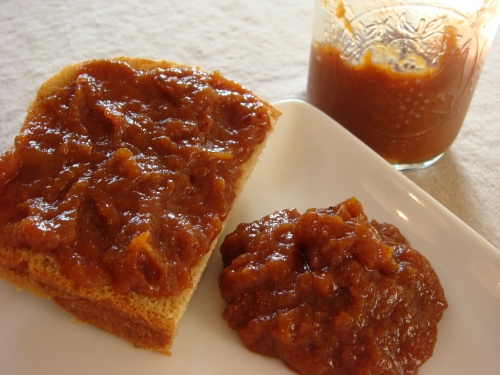
DSC02189Continue to cook until peach butter is thick. It will become a gorgeous caramel color, and a spoon drawn through the mixture will leave a trail. The exact consistency is up to your personal preference. Taste and adjust spices as desired.

If you are canning the peach butter, prepare your jars and lids and boiling bath. Fill jars to within 1/8″ of rim. Wipe rims of jars (or they won’t seal properly). Place lids on jars. Place jars  in a boiling bath canner. Return water to a gentle boil and process 5 minutes. Cool  on a towel on your kitchen counter for 24 hours. Check seal.

Enjoy!

RECIPE:

Peach Butter

  • Servings: Makes 7-9 half pint jars
  • Print

DSC02211

Peaches (about 25 for a large 5-6 qt crock-pot)
1-2 tsp ground cinnamon
¼ – ½ tsp ground cloves
1/8-1/4 tsp ground allspice
1 cup sugar
½ tsp powdered Stevia extract (or about 2-3 cups additional sugar)

Peel peaches (dip in boiling water for 30-60 seconds, then put into large bowl of ice water). Cut peaches in half and remove pits; slice peaches, if desired. Fill a crock pot with as many peaches as it will hold (leaving about 1” at the top). Stir in spices and sweeteners (proportions are for a large 5-6 quart crock pot). (NOTE: Start with a small amount of sugar/sweetener, as sweetness of peaches and personal tastes will vary. You can add more sweetener later, after the peach butter has reduced, if you want it sweeter) Set the crock pot on low or medium. Let it cook, without the lid, for 12-24 hours (cover with a splatter-guard if necessary). Stir occasionally.

When cooked and reduced, use an immersion blender to make a smooth peach butter (or leave it coarse, if preferred). Taste and adjust sweetness and spices. If butter gets too thick, add a little fruit juice. If mixture is still too thin, cook longer or transfer to a saucepan and gently boil (stirring constantly) until reduced.

Ladle hot mixture into jars, leaving 1/8” headspace. Wipe rims of jars. Place lids on jars.

Place in a boiling bath canner or steam canner. Return water to a gentle boil. Process 10 minutes. Cool on a towel on kitchen counter for 24 hours. Check seal.

Yield: 8-10 half-pint jars

NoEmptyChairs.me
12 Comments

Filed under Canning/Freezing, Condiments/Sauces